FRAIS
December 12, 2025
Peter Hughes
Citroën proves they can deliver on the promise of EVs -- novel, useful form factors unbound by conventional powertrains -- at least in concept.
Citroën is threatening us with a good time again. The French marque that brought us such stone-cold classics as the DS and SM—cars so genuinely revolutionary and bizarre that they still seem futuristic more than a half century after their debuts—has lately succumbed to the crossover-blob pandemic stupor that has decimated the 21st Century automotive imagination.
Everybody seems to have forgotten now, but, environmental considerations aside, one of the big advantages that widespread adoption of electric powertrains promised was wildly more design flexibility. The dawn of the EV era meant the possibility for new thinking, and cars as radical as the DS and SM in their time. Instead, we just got the same old stuff with a charging port where the fuel filler door used to be.
Apart from the adorable Ami runabout, Citröen’s actual product line-up could easily be confused with that of any other commodity automaker, regardless of powertrain. However, there have been occasional signs of life—indications that the restlessly inventive spirit that animated the company for so long may not have left the body entirely. There was the Oli concept back in 2023, for one. Fully drivable, the Oli posited a fully recyclable EV pickup city car made partially out of cardboard, with interchangeable doors and bumpers, and a vertical flat-plane windshield. The interior was completely orange. Fantastic.
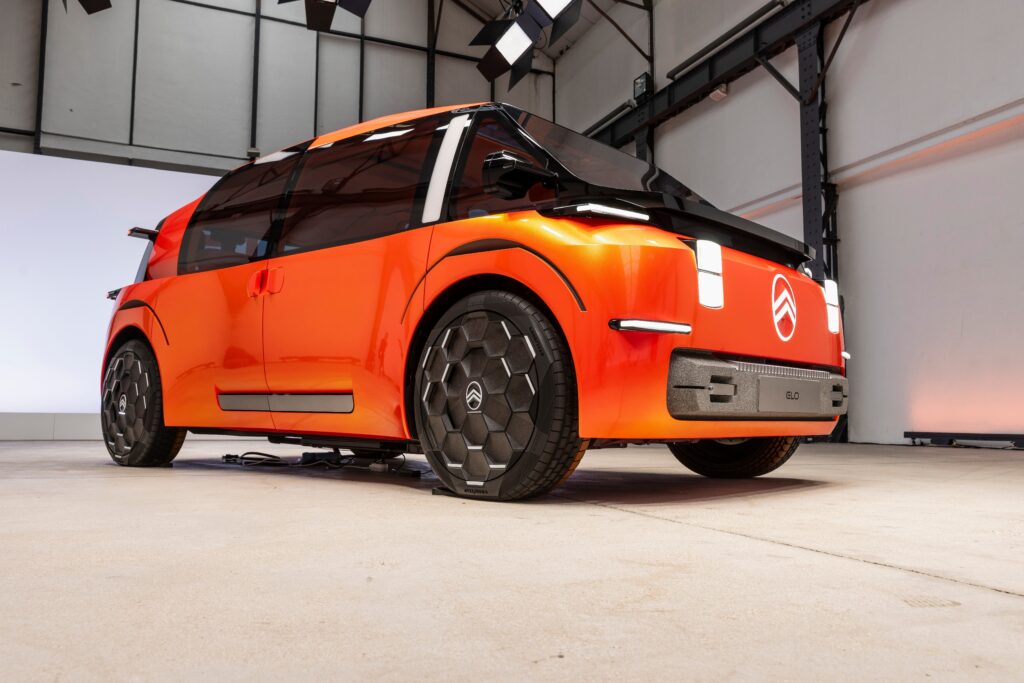
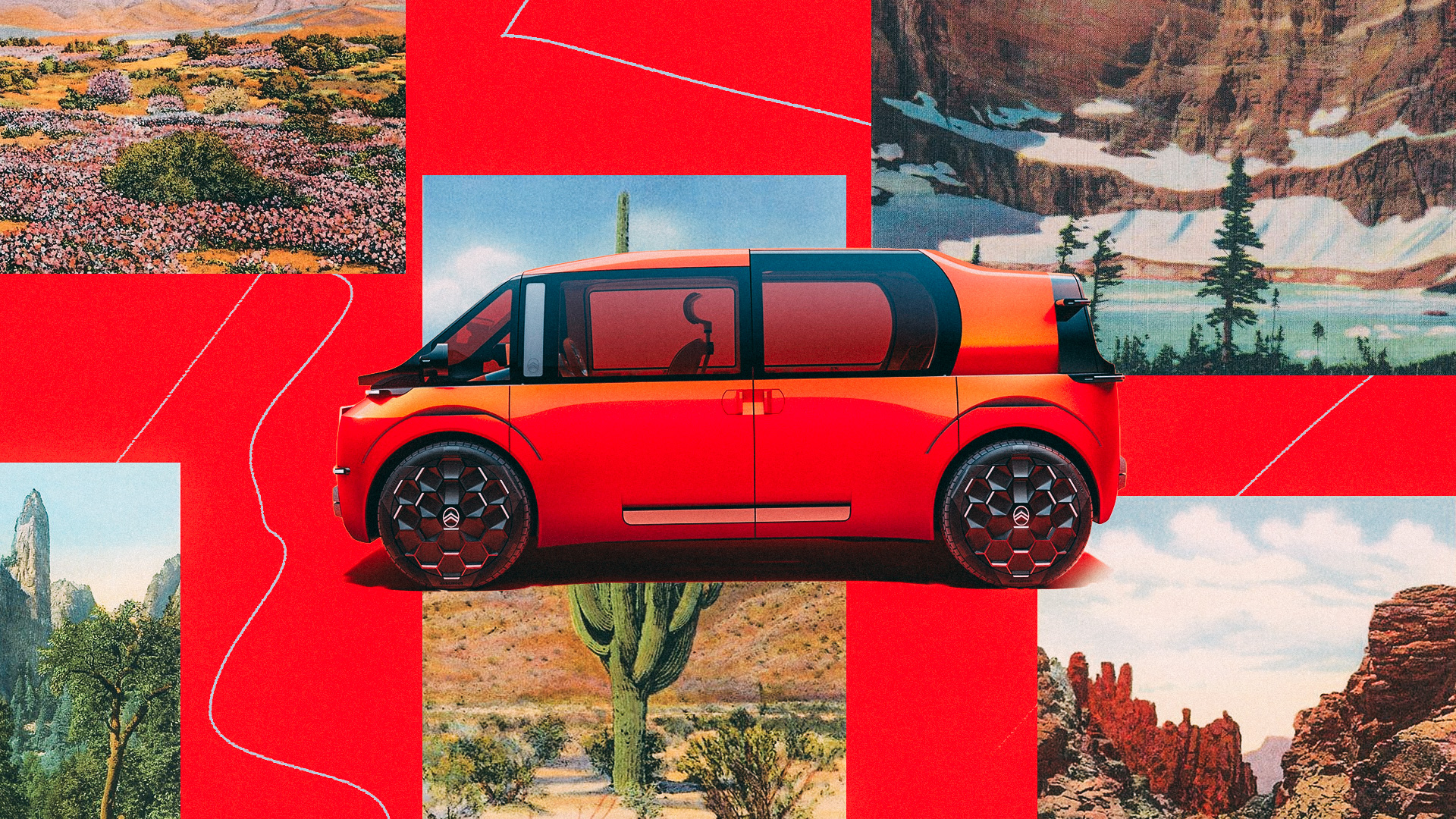
Now we have the ELO, which apparently stands for “rEst, pLay, wOrk.” We’re giving you a long leash here, Citroën. Another orange interior, but the focus this time around is on packaging. The ELO is a small-footprint, one-box design—nearly a foot shorter than a Volkswagen Golf—with a central driving position and configurable seating for up to five additional passengers. There are foldaway chairs and removable desks, inflatable mattresses and pop-up roof panels, all the accoutrements needed to turn your vehicle into the kind of “third space” that you and your break-dancing friends will actually want to spend time in.
That third space concept is one you hear a lot about these days, especially coming out of China. And it’s hard not to notice that, with its pillarless construction and swingaway doors, Citroën has essentially lifted this entire idea whole cloth from the Zeekr Mix, a delightful monobox that looks like a concept car, except that it’s been on sale for more than a year now. (The Zeekr is also bigger, normal minivan sized. -Ed)
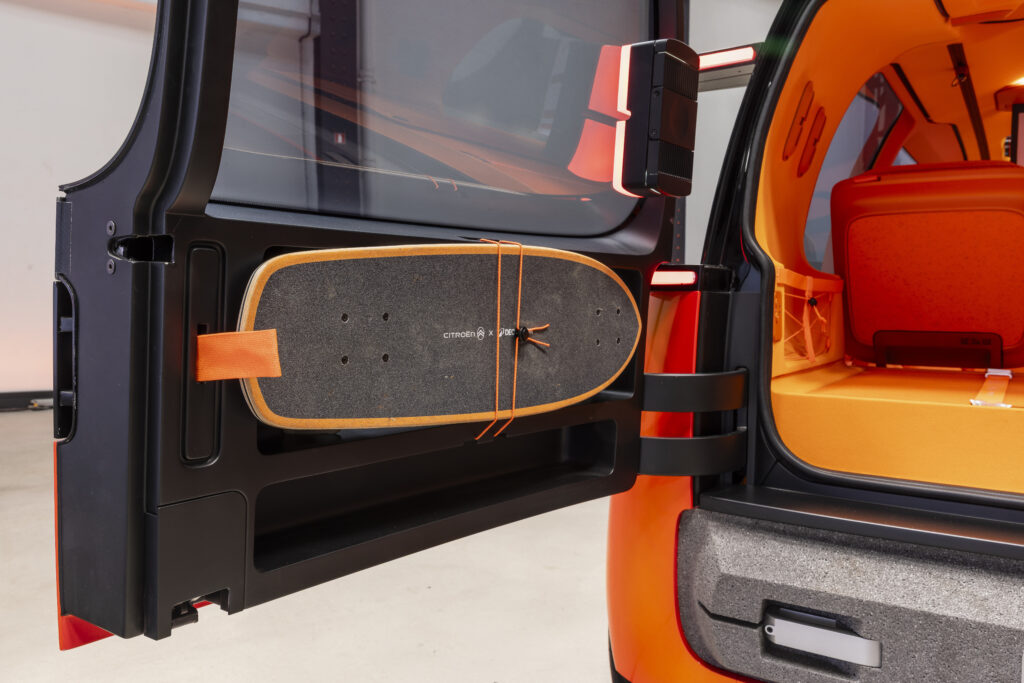
But the ELO does bring a distinctive and not unwelcome element of whimsy to the party, and not just in terms of vibes. Design director Pierre Leclercq points out that one of Citroën’s aims with these concepts is to favor analog solutions over electric ones where possible, the simple over the complex. You see evidence of this in things like lightweight, manually folding and sliding seats rather than the motorized ones you might expect.
In this sense, one can almost see the ELO as a uniquely French response to China’s technological might in the same way that the rustic 2CV answered the Volkswagen Beetle ninety years ago. Neither was meant to compete directly with the other; rather, they represented indigenous solutions to similar problems in different contexts.
It’s impossible to know if Citroën is any more serious about bringing something like the ELO to production than they were about the Oli. What’s most exciting about it to me, though, is the fact that at least one manufacturer outside of China is thinking about the potential for EV platforms to open up radically different packaging possibilities.
We’ve already established that people are so bored with mediocre SUVs that they’re hungry for wagons for the first time in decades. Are we ready for a new minivan revolution, too? How about it, Stellantis? Let’s make Citroën weird again.
Recent Posts
All Posts
March 17, 2026

March 16, 2026
March 12, 2026