Up North
December 15, 2025
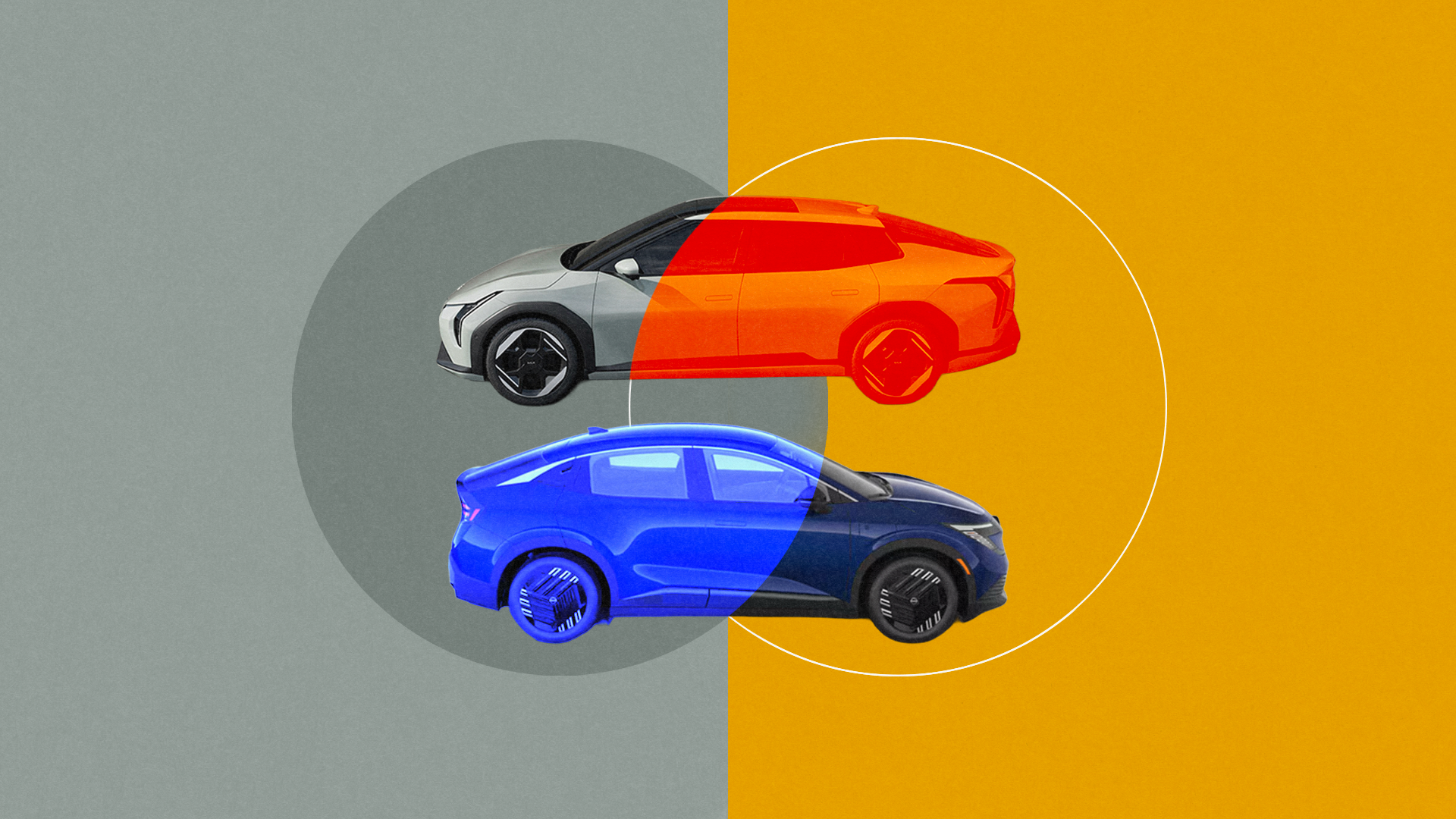
Alex KiersteinIn Canada, the new Nissan Leaf will have to battle the Kia EV4, which undercuts it by a significant amount.
Since we’re not getting the Kia EV4, at least not anytime soon thanks to tariffs, this is more of an interesting anecdote about the small but interesting differences between the Canadian car market and the US market. Kia just released pricing for the Canadian EV4, and the base model undercuts the Nissan Leaf by a significant amount. Thousands of dollars.
For clarity, I’m going to convert the Canadian MSRPs to US dollars, because I want to also compare them to US market prices.
The 2026 Nissan Leaf is in Canada, like ours, an all-new model that trades its (aging and not particularly in-style) hatchback profile for a crossover coupe-like shape with a few (too few) interesting color options. The EV4 is all-new, and is not for us. It has a radical, unusual shape; it’s ostensibly a sedan, but its angularity challenges the three-box norm.
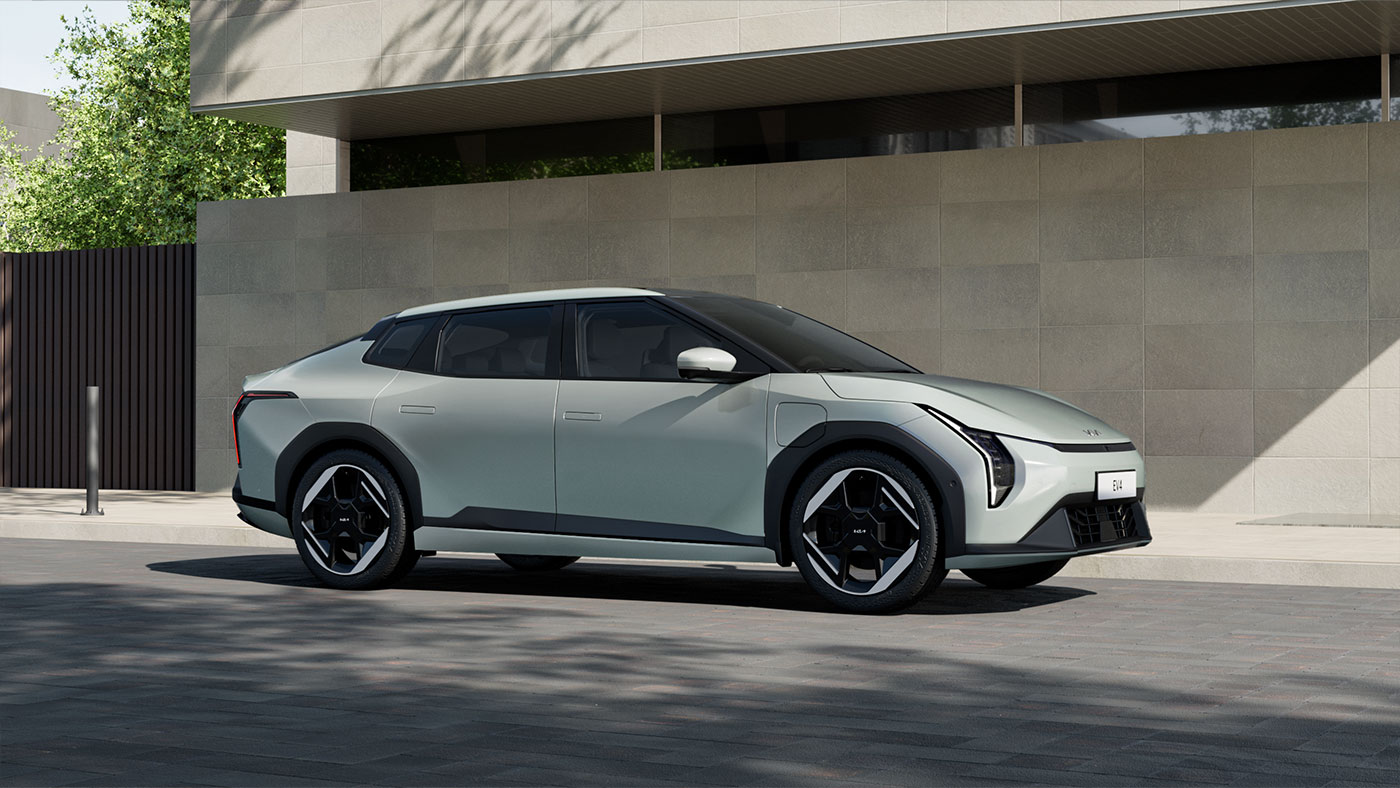
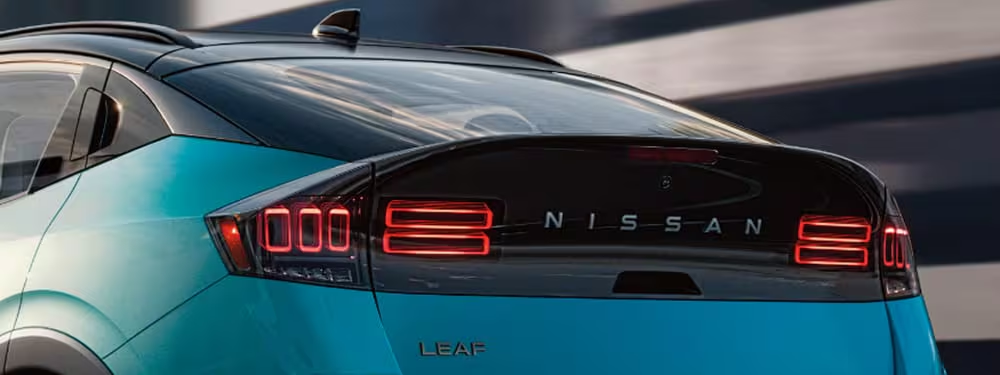
The price delta here suggests these two vehicles might be in differnt classes entirely. That’s not necessarily the case. The Kia EV4 offers up to 330 miles of range from a 81.4-kWh battery; the Leaf up to 303 from a 75-kWh battery (which is now liquid-cooled, unlike the original). The Leaf is less than an inch shorter. The EV4’s front-mounted motor produces roughly 202 horsepower, and the Leaf offers slightly more, at 214.
So what is the price difference? The 2026 Kia EV4 will be $28,325 in Canada to start (that’s for the standard range base model, with a 58.3-kWh battery but the same motor) while the Leaf starts at $32,673. That’s a $4,300 or so difference. But the small-battery Leaf will be “late-availability,” and so the only Leaf on sale right now is the Plus (in both the US and Canada). The S Plus base trim, with a 75-kWh battery, accounts for some of that difference.
A fairer comparison might be the EV4 Wind Long Range, the cheapest model with the 81.4-kWh battery. It’s $31,215, almost $1k less expensive.
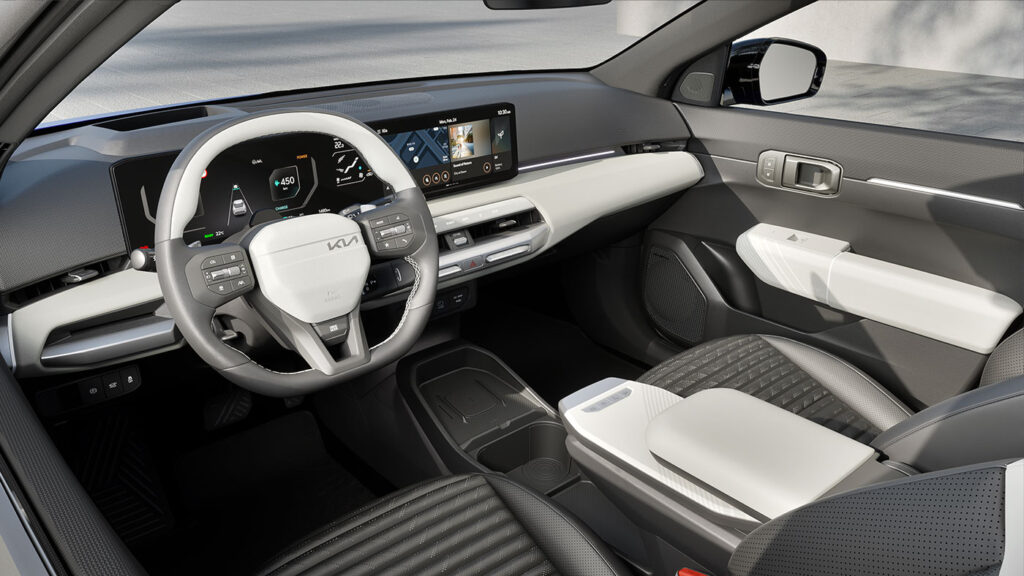
I hope Nissan didn’t choose to offer the smaller battery model later, and that it was some sort of production issue or other constraint. Because while the Canadian market is a little different than ours, shoppers are extremely price conscious in general. And offering an EV that is a full $4,000-plus cheaper than the cheapest rival is a coup—and that’s even accounting for the possibility that base-trim Light versions of the EV4 will be loss leaders. That is, light on the ground, serving mainly to get traffic into dealerships that can upsell to higher-trim models. It’s a battle I have a hard time seeing Nissan winning without some sort of incentive offer or a serious marketing campaign, as the EV4 is fresher and quite striking, while the Leaf is much more conservative (albeit not unattractive).
Meanwhile, in the US, our 2026 Leaf S Plus starts at $29,990, and the EV4 isn’t available at all. Blame protectionist policies and other headwinds conspiring to dull interest in EVs. It’s too bad, because the EV4 is priced and equipped to be a good alternative to the Tesla Model 3, which remains popular due to its combination of price, features, and sleek sheetmetal.
Recent Posts
All Posts
March 17, 2026

March 16, 2026

March 12, 2026
Leave a Reply