CabriowAgen
December 4, 2025
Alex KiersteinMercedes-Benz readies a less serious version of its rugged box, with less roof and more attitude, something that’s overdue in the segment.
Mercedes-Benz confirmed the G-Class cabrio a while back, but other than an (unmistakable) silhouette teaser images have been nonexistent by design. The standard, engineered trickle of tidbits, following the usual procession of things from teaser to camouflaged pre-pro vehicle, has been followed precisely. But the crux of the G-Class cabrio isn’t what it is going to look like, since that was never really in question. It’s what it brings back to the segment: a bit of fun.
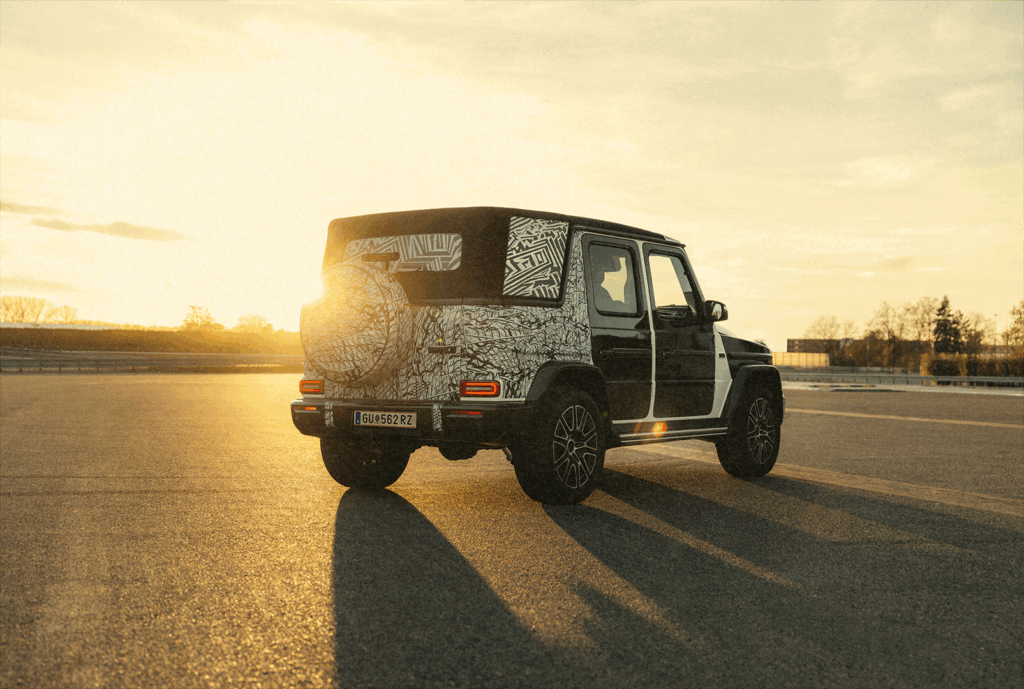
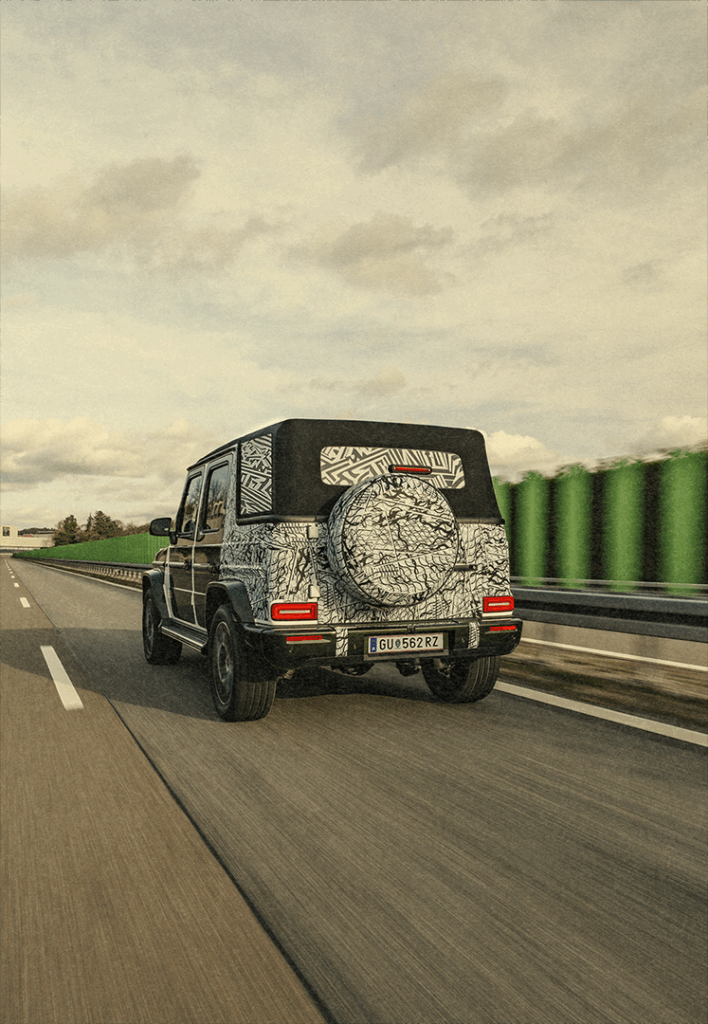
This isn’t a “grass is greener” sort of perspective. In the early days of SUV adoption, we had a remarkable panoply of convertible SUVs with a huge number of top configurations. The convertible SUV was basically the standard form, particularly for the pre-mass-market wave. Think about the original Bronco (one version was even offered with no provision for a top at all), the International-Harvester Scout, the Chevrolet K5 Blazer.
Then think about the 1990s second-wave SUV rush, with a wave of three-door landaulet crossovers: the Kia Sportage, Isuzu Amigo, Land Rover Freelander, Toyota RAV4, and so on. Sure, this was the era of body style variety that seems unimaginable today. You could get a Geo Metro convertible. Crossovers were new and manufacturers and consumers were just figuring out what would stick. The practical four-door hardtops won out, with a few roll-back style canvas roofs as a consolation prize (unless it was found on a Jeep Liberty, in which case it became a vehicle-totaling liability).
Jeep, of course, kept three-door removable tops around, and the new Bronco eventually followed suit. But we (Americans) lost an entire class of vehicles that added some fun and levity to what was otherwise all-purpose transportation.
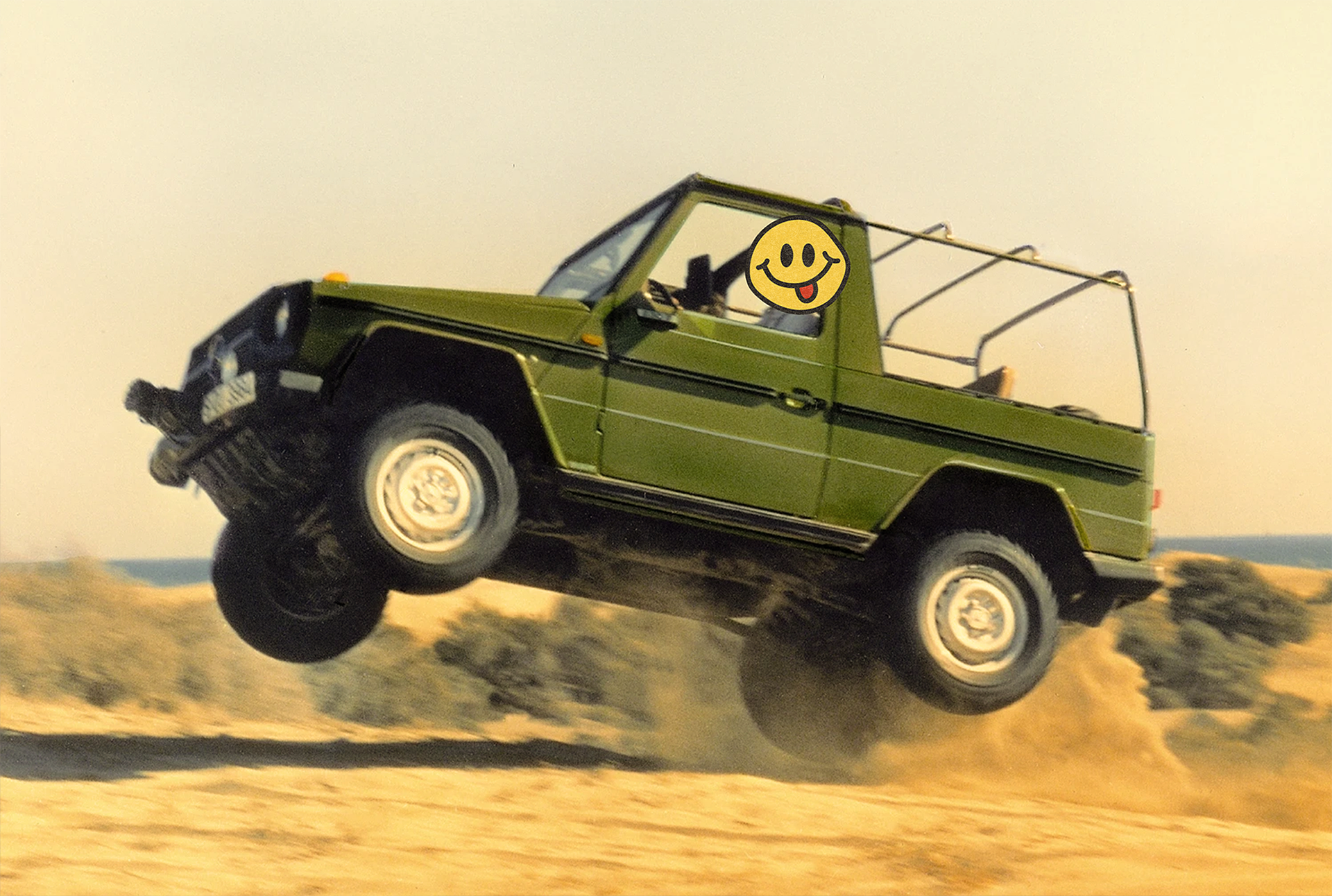
Not that the G-Class’s Gelandewagen predecessors were necessarily “fun,” being serious machines intended for serious work. But the European-market three-door convertible certainly could be, in the same way a Steyr-Puch Halfling with the side curtains removed is fun ambling up a mountain road or to a backcountry ski lodge. It’s additive fun. There’s no real downside besides some additional seals to maintain, some noise, periodic top repair, and some additional cost.
But this wasn’t a G-Class variant that Americans got to enjoy, at least officially. A few came over as gray market imports, some old ones have made their way here. In some ways, it didn’t comport with the American understanding of Mercedes-Benz. In the European conception, the E-Class is a taxicab, basically, with upmarket luxury variants. Everywhere but here, the Geländewagen (and, in some respects, the Land Rover) are working vehicles, what farmers drive. (Again, with upmarket luxury variants.)
So it is that the only G-Class cabrio officially sold here previously was the so-expensive-that-its-price-wasn’t-officially-released Mercedes-Maybach G650 Landaulet. Its sticker price and exclusivity put it into the conspicuous consumption category, not the category where it is purchased for the enjoyment of open-air motoring. The landaulet aspect was, I’d argue, simply to rarify it.
Not that the new G-Class cabrio will democratize things, necessarily. It will certainly be more expensive than the 2026 Mercedes-Benz G550, which starts at $155,650. And less common, surely. But it will blend a historic note that strengthens its sales pitch of utilitarian roots and modern performance, adding a bit of fun to the USP. Mercedes didn’t need to build a G-Class with a rear folding top, but I’m glad it will.
Recent Posts
All Posts
March 17, 2026

March 16, 2026
March 12, 2026