It’s Euro Van Time

March 12, 2026
Alex KiersteinRam reboots the Promaster City and Mercedes-Benz conjures up an electric luxury van it doesn’t want to call a van.
I happen to think that the trend of selling the European-style large and small vans in America is a fantastic one. It just makes sense: they’re space-efficient, with relatively compact exterior dimensions, cavernous interiors for their footprint, and comparatively small engines. A Ford Transit SWB low-roof cargo van, for example, weighs 5,000 pounds, offers 247 cubic feet of storage, and has a spacious cabin. A Chevy Express cargo van weighs 5100 pounds, 240 cubic feet of room, and is ancient and less ergonomic. Vans are incredibly utilitarian, and so Ram reviving one of its most utilitarian vans of them all—the Promaster City—as a roomy midsizer makes some good sense.
The new Promaster City, like its predecessor based on a European van with a complicated rebranding pedigree, is bigger. It’ll hold 167 cubic feet, well up from the old Promaster City’s 132. But, interestingly, it ditches the old 2.4-liter Tigershark I-4 for a 1.6-liter turbo I-4 that makes 166 hp and 221 lb-ft, backed up by a traditional 8-speed automatic. It’ll tow and haul 2,000 pounds, respectively; up a smidge from the payload and matching the towing of the old one.
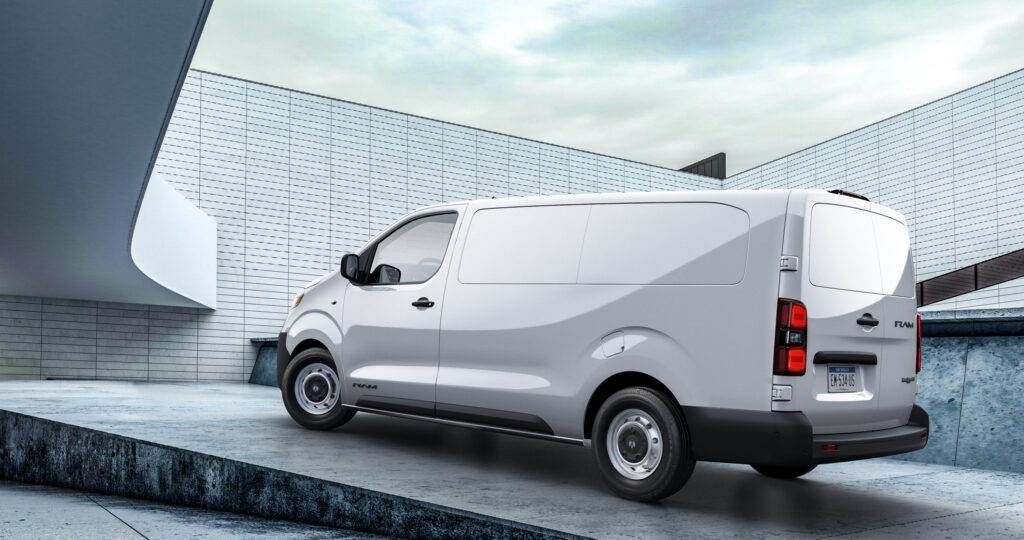
It also looks a bit more modern, with a profile closer to the box-and-a-half traditional van shape than the old two-box Promaster City, which was a weird amalgam of Euro MPV, distorted hatch, and mail delivery truck. Not that it was unattractive, it was just a strange shape, an evolution of the panel van variants of otherwise normal Euro hatchbacks that made (and still make) up a good portion of the small commercial space over there.
Ram says it’ll come in under $40,000 when it arrives in dealers early in 2027. Somewhat surprisingly, there’s no mention whatsoever of a parallel hybrid variant.

Even more surprising to me is what Mercedes-Benz Vans is up to. The Metris departed our market recently, a poor seller despite being a nice size compliment to the larger (and more popular) Sprinter. I never really got a bead on why it didn’t capture at least enough of a slice of the market to stick around beyond a large postal service order, but Automotive News pointed to a weakness in the midsize commercial van market in general. Don’t tell that to Ram, because the Promaster City has grown into exactly that.
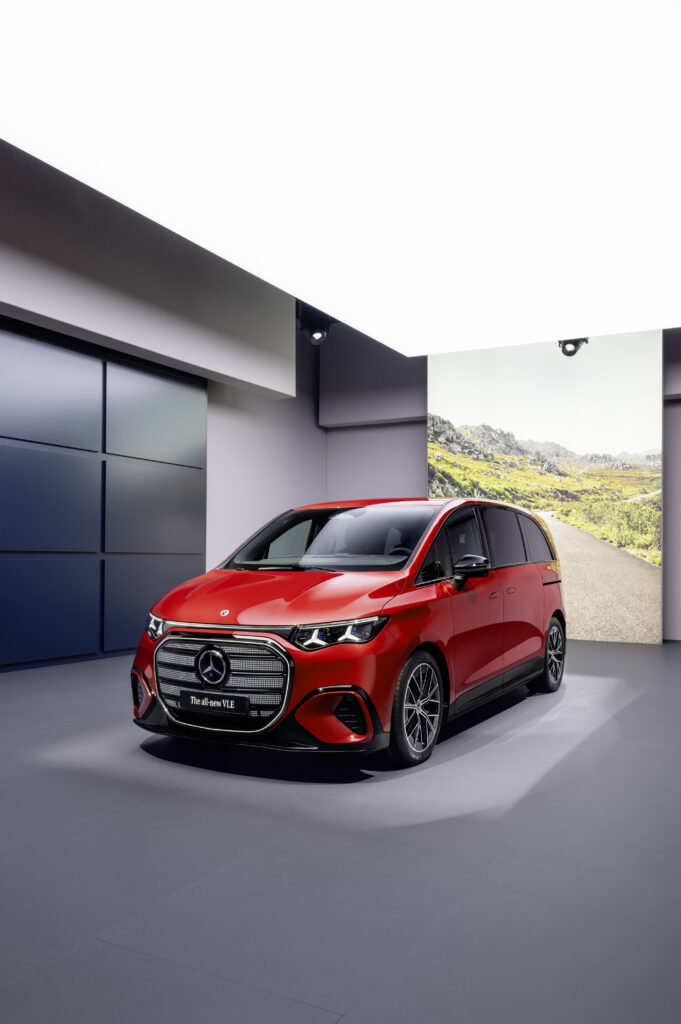
Now, the company is bringing over the VLE. And the VLE is no Metris. It’s a luxurious electric van with an emphasis on comfort and versatility—not utility, versatility. In fact, the only reference to “van” in the Mercedes documentation on the VLE is in reference to the platform it rides on. Elsewhere, it’s referred to as “limousine-” and “MPV-like.”
I’ve always felt that this sort of obfuscation doesn’t help the product any. It’s a van that the company studiously avoids calling a van; this is the sort of marketing doublespeak that, to me, leaves a void in which only negativity can fill. Avoiding “van” signals an issue with the genre, a perception or branding problem. That gives me pause; what’s so wrong with this genre that the company won’t even use the term?
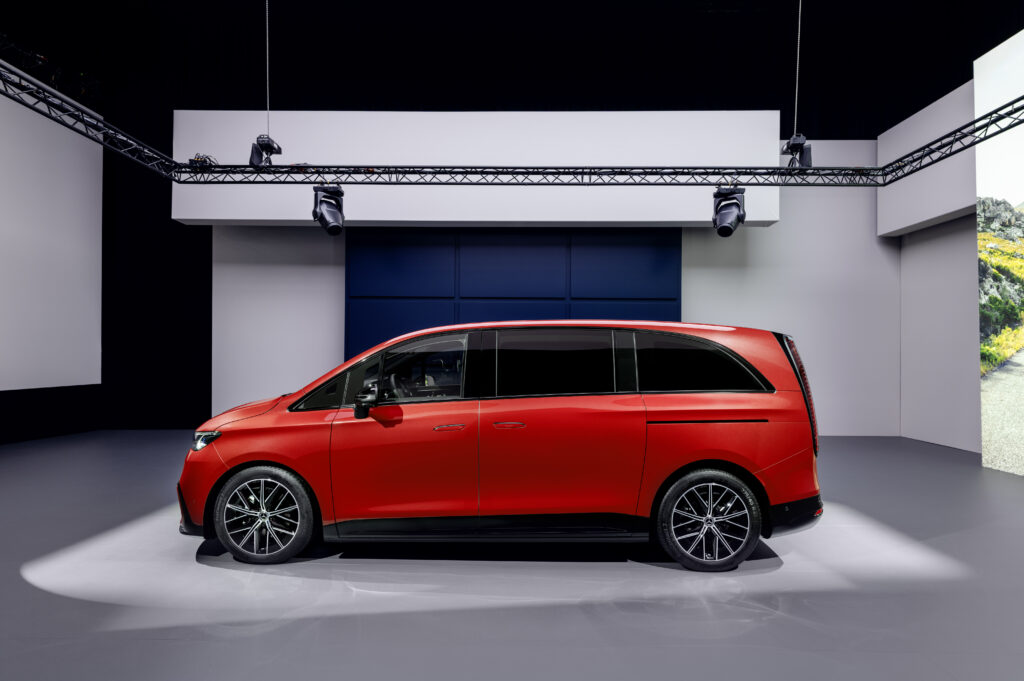
The VLE looks awfully van-like, too. It’s not been SUV-ified like the (rather handsome) Kia Carnival, which can make a solid case as being a sort of SUV-minivan crossover in a way the Mercedes can’t. That’s not to say the VLE looks bad; I think it looks great. There’s no real objective reason why large, premium “executive express” transports like the VLE haven’t caught on here. The roominess and comfort are superior to the large three-row domestic SUVs that seem to dominate that space. But, they don’t.
And its 115 kWh battery, 800v charging system, and luxury trappings wouldn’t do much if the range wasn’t sufficient for US tastes. Luckily, Mercedes claims a whopping 435 miles in Euro testing; let’s guesstimate something in the upper 300s for a likely EPA rating. Depending on the price point, it could be an interesting counterpoint to the slow-selling Volkswagen ID Buzz, which was slightly less premium, albeit maybe too premium for its slot in the EV world. And with much less range.
I will say this: the VLE would make a fantastic livery vehicle. I’d much rather ride to the airport in one of these than a Prius. We’ll see if Mercedes’ ability to talk around its van-ness, and its price, make it compelling for upscale van intenders.
Recent Posts
All Posts
August 3, 2026

July 30, 2026

July 27, 2026
Leave a Reply
You must be logged in to post a comment.