Generative

February 9, 2026
Alex KiersteinGenesis says it's getting an all-new, bespoke, "completely different" platform. Here's what that could mean.
In an interview with Autocar in the UK, Genesis’s European Managing Director Peter Kronschnabl told the outlet that it is developing a platform for its vehicles that is “completely different” from its Hyundai Motor Group sister brands. That might seem wild, given the Hyundai Motor Group’s immense success producing many, many iterations of vehicles from common components. But Genesis has been out there on its own platform for quite a while.
I understand why Genesis, a premium brand, would want its increasingly sporty and driver-oriented offerings to be even further differentiated from Hyundai or Kia models. There’s a branding argument, an identity argument, an emotional argument there. And it’s a big part of the reason that Genesis models mainly ride on a rear-wheel-drive-based platform not used currently by any of its sister brands. Sure, it was developed to be used in the Kia K9/K900, and a derivation was found under the Kia Stinger, but these are not high-volume mass-market vehicles. You can safely consider the premium RWD bubble to mostly contain Genesis models. The E-GMP Genesis GV60 is an exception, but one that makes sense and doesn’t really detract from Genesis’ USP.
I think there are a few ways of interpreting Kronschnabl’s statements to Autocar. I can imagine a heavy revision of the existing platform to do away with some of the compromises inherent with the Electrified versions of the G80 and GV70, which drove great but which had the packaging compromises typical of EVs adapted from an existing chassis. While the M2/M3 platform was sometimes described as being agnostic to power source, it wasn’t optimized for its EV variant. (It is, however, a phenomenal platform, and the current crop of Genesis vehicles are really fantastic overall.)
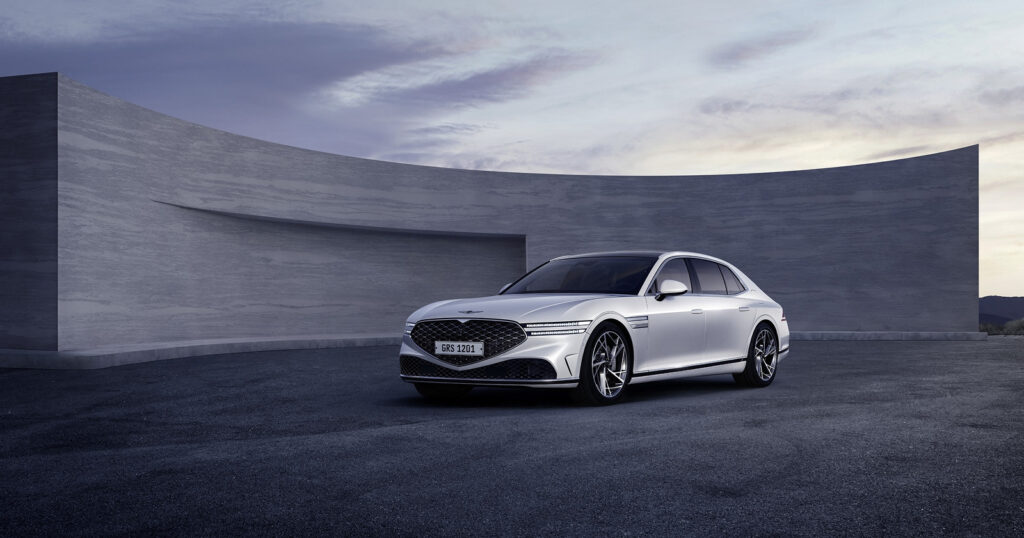
A truly new platform is also a real possibility. I think there are two reasons this might be the case, even though it seems like a crime against economy of scale given the platforms on the Hyundai-Kia table already. One, Kia has been teasing something many have interpreted as a next-generation Stinger. Observers I know and trust in the industry have wondered whether it might be some sort of hybrid or EREV instead of another E-GMP variant. Hyundai has clearly indicated, as well, that it is interested in EREV powertrains for its larger vehicles. And lastly, Genesis itself has been hinting that it may not replace some of its smaller models.
Add this all up and I wonder if “bespoke” and “completely different” from other HMG products might actually mean “basically not shared with anything else, except the Kia Stinger replacement, which we’ll take pains to point out is slightly different in some respect.” Which would be fine. How much does Genesis need to differentiate, really? Is there some specific percentage of parts that must be unique? I dunno.
I doubt that a single prospective Genesis buyer would bat an eye if the salesperson was required by law to tell them that the 2028 Kia Stinger will also ride on the same platform. I think what matters is that Genesis can say with a straight face that a combination of platform variation and specific brand tuning makes it theirs alone. And that is probably what will happen.
Recent Posts
All Posts
August 3, 2026
July 30, 2026

July 27, 2026
Leave a Reply
You must be logged in to post a comment.