Handled
December 23, 2025
Alex KiersteinTesla’s electronic door handles may become inoperable after a crash. Bloomberg’s report shows how deadly the issue may be.
A few weeks ago, Jay wrote about NHTSA finally getting involved in complaints regarding the door handle design on Tesla models. Mainly, that they are unintuitive, sometimes inoperative, and for first responders a combination of both. There are manual handles to override the sometimes inoperative electronic ones, tucked away in some very strange places.
It seems like a big old mess. And Bloomberg’s new report attempts to quantify it, using the grimmest measure available: dead Tesla occupants. Fifteen, by Bloomberg’s count.
This is a good measure only because it seems to be the only mechanism that kicks federal regulators into action. There needs to be a body count before the devices that allow you out of, for example, a burning Tesla are examined for safety reasons. Same goes for the deaths that follow first responders not being able to operate the doors after a crash.
Because the manual door override handles are all inside the vehicles. There are none on the outside. Sometimes they’re hidden behind the speaker grille, which you have to manually remove in order to escape.
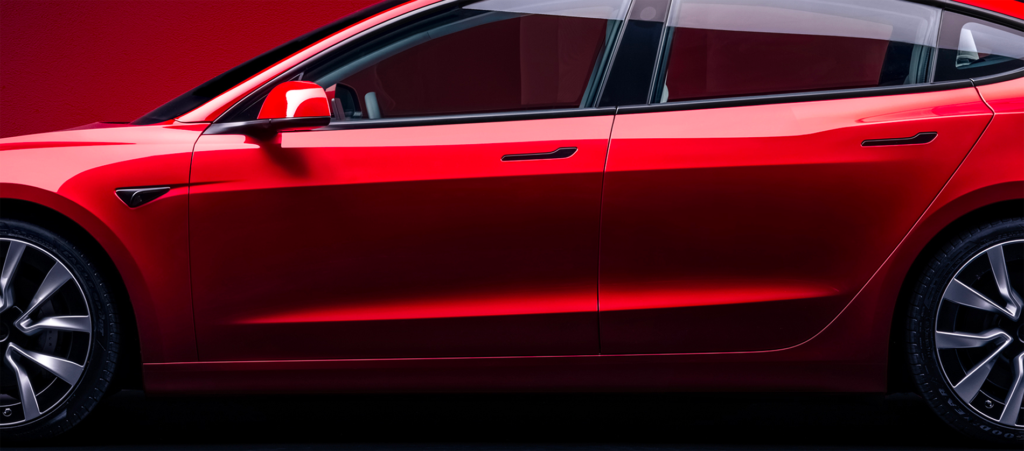
It is almost impossible to reconcile the fact that the government regulates a whole host of extremely specific safety attributes and equipment, such as mandating airbags and backup cameras, and yet the efficacy of something so fundamental as a door handle can be allowed to slide by.
Tesla’s electronic door handles, it is alleged, can fail after a crash. Tesla has, in the past and recently, responded to these allegations with promises of improvements or redesigns. As Bloomberg notes, it just added a page regarding safety, promising that some vehicles (it’s not specified which ones) will now unlock after a crash. Other promises include unlocking when the battery reaches a certain low state of charge.
There are certainly issues with mechanical door mechanisms. They can take up a lot of room inside the door. They can be heavier or more complicated to implement. But automakers are figuring it out, even with electronic door handles, by including a manual override. Mechanical door mechanisms can fail, but the way in which Tesla’s fail—in ways that leave occupants and first responders alike confused and unable to operate them—has had fatal consequences.
Bloomberg wasn’t able to draw on some government source of the data, instead having to collect government data and cross-reference it with a variety of other sources in order to come up with 15 relatively clear-cut cases in which Tesla door handle failures seem to have caused fatalities. Perhaps the fact that the data isn’t being collected in a way that makes it clear to regulators that there is a fundamental issue here is contributing to the problem.
We have regulations to protect consumers from corporate decisions that unacceptably prioritize profit over safety. A novel door handle design with few benefits and many drawbacks seems to fall into that category. It is baffling, as well, that Tesla is allowed to place its emergency door release handles in places that are not only unintuitive, but also completely out of sight.
Consider the precedent of the trunk release handle, often glow-in-the-dark, and prominent. The government wrote the requirement into the FMVSS after eleven children died in the summer of 1998. It’s baffling that it took that long. Now, we have occupants—adults, children, pets, whatever happens to be inside a Tesla when it crashes—at risk of an equally horrible death. Bloomberg’s report is distressing, especially the eyewitness accounts.
Why single Tesla out when every automaker has some horrible failure in its closet? Well, in this instance, Tesla singled itself out with a door handle design that appears to inadequately address occupant egress in a collision, and hinders first responders. No one forced Tesla to choose the handle. And I have trouble understanding how changing the design seriously affects Tesla’s margins or unique sales proposition.
What an unnecessary thing to sacrifice lives to.
Recent Posts
All Posts
August 3, 2026

July 30, 2026
July 27, 2026
Leave a Reply
You must be logged in to post a comment.