After Car
November 28, 2025
Brett Berk
The War On Cars makes the case for a less car-dependent world.
New Book, “Life After Cars,” Is Worth Reading, Despite its Title
Its proscriptions will make driving better for people like us who love to drive
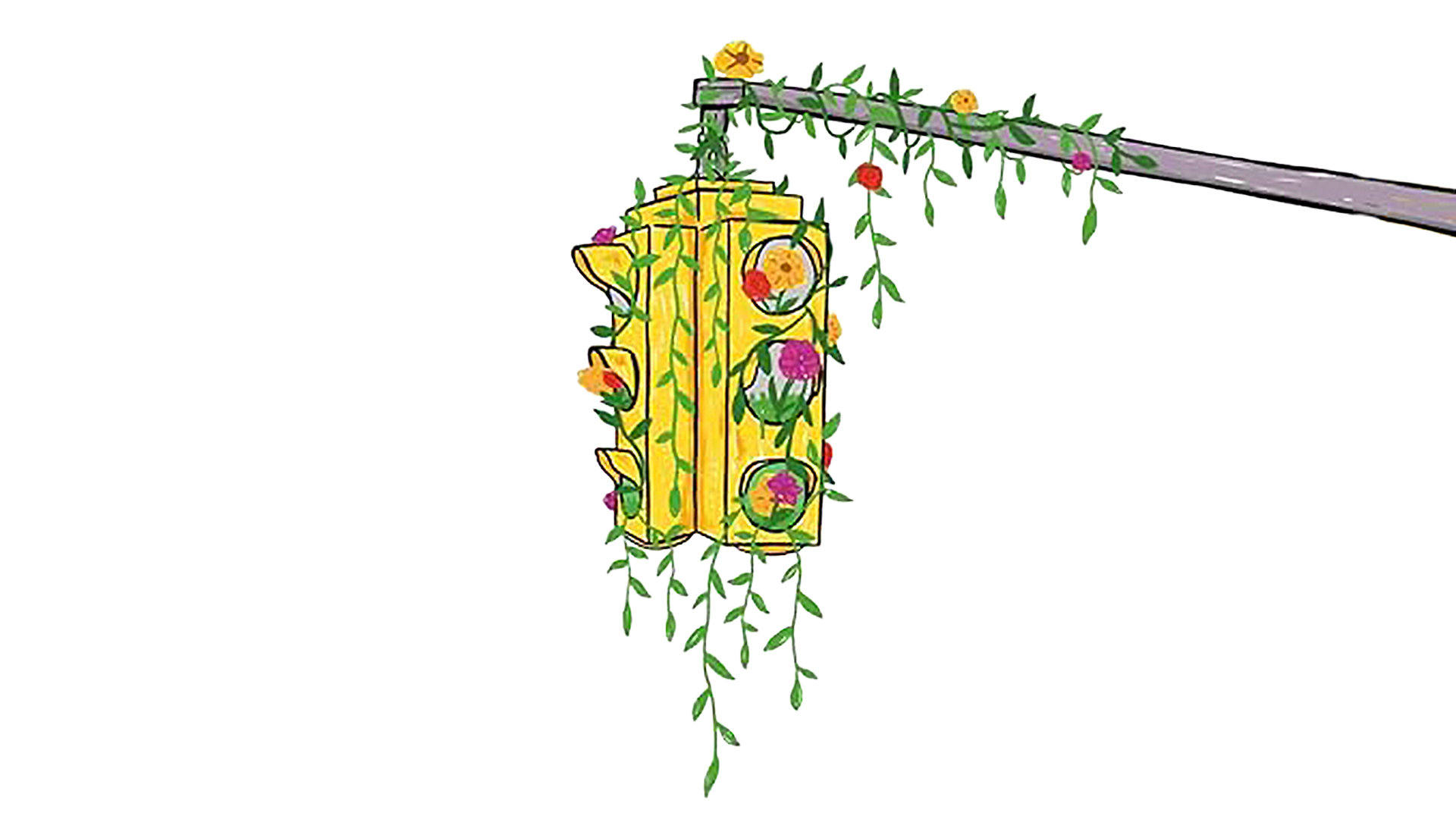
Sarah Goodyear and Doug Gordon host a podcast called “The War On Cars.” So it wasn’t surprising that the first line in their new book, “Life After Cars: Freeing Ourselves from the Tyranny of the Automobile” was: “Cars ruin everything.”
While all of this may seem inflammatory and alienating to us, like many things in life, it benefits from adopting a non-reactionary interpretive modality. As it turns out, we all want the same thing.
“A lot of our listeners are car enthusiasts and love driving,” says Gordon in an interview with both authors from their book tour stop in Portland, Oregon. “And what they say is the kind of driving that they love to do—the weekend road trip, or getting in a classic car that maybe they’ve tinkered on in the garage—those trips are ruined by all the other people on the roads who could be making other transportation choices if choices existed for them.”
Removing cars from our roads, and making them more navigable and enjoyable for those of us who want or need to drive is in everyone’s best interest. So, while the book spends significant time outlining the familiar litany of ways that automobiles make people’s lives worse—physically, psychologically, emotionally, financially—it also focuses on actionable proscriptions that benefit society at large, and autophiles in particular. It’s a breezy and worthwhile read, and an inducement to recognize unforeseen allies and ally with them.
Contrary to popular belief, we can’t pave our way out of this crisis. Simply adding more roads is akin to attempting to solve for obesity by buying a larger belt. Instead of implementing this thankless and thoughtless task, Goodyear and Gordon, and the communities they’ve visited around the country, offer a range of alternatives.
First and foremost is adding public transit, as well as dedicated and protected bike lanes. Then people who can’t, can’t afford to, don’t need to, or don’t want to drive have other options, and can remove themselves from our overcrowded roadways. “The weird thing about our movement is that it’s kind of like nineteenth century solutions to twenty first century problems,” says Goodyear. “This movement is often associated with bicycling,” Gordon adds, “but transit is imperative and I think it should be transit-first in a lot of ways.”
Transit not only means costly subway or light rail systems; it can also be surface street initiatives, like buses or van lines, solutions that can retro-fit quite readily into existing infrastructure in car-dominant urban centers, in part because they were already built around such services. “Los Angeles, for example, was a former streetcar town. That’s part of why it’s as sprawled out as it is today,” Gordon says. “Cities like that have like good bones, and here and there, good little nodes of walkability or bikeability, or trail systems. It’s just about readily linking all of that together for people.”
Because cities are often burdened by well-intentioned bureaucracies, sometimes activists are needed in order to point out these realities, or bring them to fruition. Goodyear and Gordon detail myriad such instances, which they refer to as “Tactical Ubranism.”
The L.A. Crosswalk Collective, for example, goes out and paints rogue crosswalks at intersections where there’s been a history of crashes, injuries, or deaths, or where people have requested a crosswalk but the local Department of Transportation has long-listed it. “The interesting thing that has happened is, when they go out and paint these crosswalks, the L.A. Department of Transportation immediately acts to remove them,” Gordon says. “So, they are making the point that while the government can’t act quickly to make change, it certainly can act quickly when it’s in service of preserving the status quo.”
They also discuss bicycling activists in New York and Boston, who have enhanced non-existent or unprotected bike lanes in ad-hoc fashions—with pilfered traffic cones and plastic flower boxes—to call attention to safety issues, and to create a better barrier between bikes and cars. Here, instead of practicing revanchist policies, the local Departments of Transportation adopted the setup. “They upgraded those to protected two-way bike lanes,” Gordon says. “So, it can yield results.”
Perhaps our favorite guerilla actions are those undertaken by activists during Park(ing) Days celebrations. On this annual event, which celebrates its 20th anniversary in 2026, people reclaim streetside parking spots and transform them into makeshift parks, complete with sod, benches, and umbrellas. “It’s about disrupting patterns of thought,” says Goodyear. “We allow private property to be stored at the curb in the form of cars, but not really anything else. So, it makes people see that in a different way, and with good humor.”
Given all of this activism, and the sensible nature of the ideas it proposes, cities across the country have taken it upon themselves to begin enacting reform. In addition to dedicated bike lanes, and new uses of spaces formerly dedicated to parking—such as outdoor dining sheds, pocket parks, or even centralized trash collection bins—cities are implementing additional and low-cost or free bus lines. “Obviously, a lot of cities are now going to be leaning into what was a winning issue for Mamdani in the recent New York City mayoral election,” Goodyear says, referring to the Mayor-elect’s “Free Buses” campaign pledge.
Perhaps the most successful reform has been congestion pricing, as recently enacted in New York. Long popular in Europe, it uses license plate readers to charge a fee to people to drive a private vehicle into the urban center, thus nudging those who do not want to shell out to explore other travel options.
“I don’t think we’ve ever seen a policy be implemented and the results be so positive so quickly,” says Gordon. “Within days, complaints to the City about noise and honking went way down in the places that were closest to commuter centers like bridges and tunnels. Bus speeds increased in the congestion zone, so much so that some buses had to pause at stops because they were running ahead of schedule. And it’s delivered measurably on better air quality, less traffic congestion, and revenue for the transit system.”
Providing a suite of other transit options also limits dedicated drivers’ potential for mishaps. “Removing bikes and pedestrians and a surplus of cars from the flow of automotive traffic really reduces your chances of having a crash in which you or someone else might be hurt or killed,” Goodyear says.
Global statistics on driver enjoyment point toward the implementation of all these solutions. “The most satisfied drivers in the world, in survey after survey, are the Dutch, because in the Netherlands there are so many alternatives to driving,” says Gordon. “So, when you do have to drive in the Netherlands—if you’re unable to take other modes or it’s just the right tool for the trip—you’re not stuck in traffic behind all of the people who are picking up their kids from school or driving to the grocery store or going a short distance to work.”
Gordon sums things up. “The advice I probably would give to drivers who are a little skeptical of this movement is, if you want a better, more enjoyable drive, get all your neighbors on bikes and on transit and don’t be opposed to that stuff.”
Recent Posts
All Posts
August 3, 2026
July 30, 2026
July 27, 2026
Leave a Reply
You must be logged in to post a comment.