Most Pepper
November 21, 2025
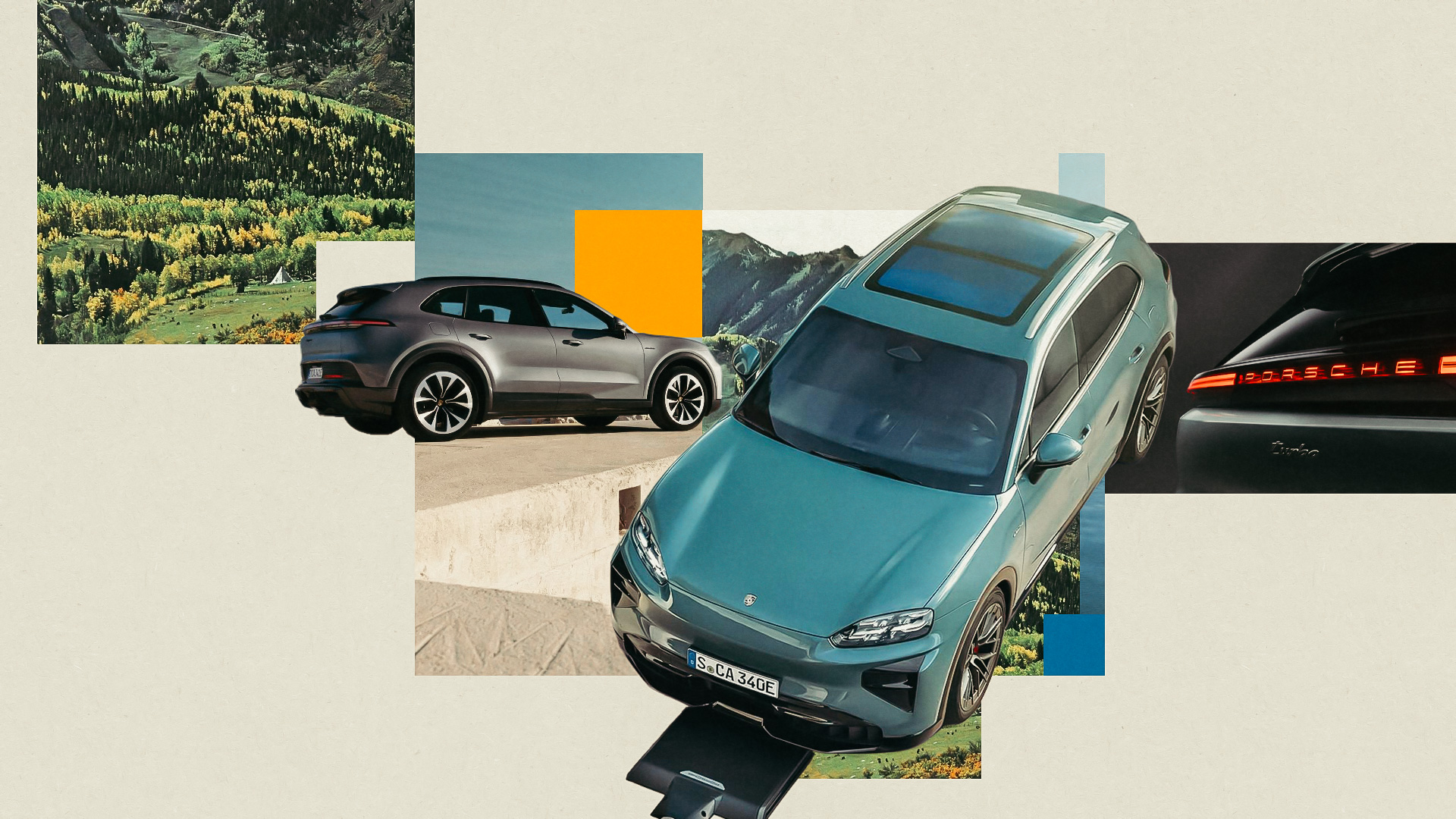
Alex KiersteinThe Porsche Cayenne Electric applies the Macan EV formula in a larger package. Hopefully the Macan’s appeal flows upward.
How vast the gulf between wants and needs. The new Porsche Cayenne Turbo Electric is the most powerful road-going Porsche ever—despite having exactly zero turbochargers aboard. Not the 918 Spyder; that produced merely 875 total combined horsepower from its hybrid powertrain. Instead, this large SUV, in electric guise, makes 1,140. One thousand one hundred forty.
Porsche claims it will hit 60 mph in 2.4 seconds, which in my mind is simply more evidence that acceleration times are meaningless. That isn’t an indictment of EV performance, but rather, an indication that we’ve reached a point at which power is no longer an issue. If you want an SUV that can thoroughly embarrass Italian exotics, it’s simply a matter of arranging payment to a Porsche dealer.
The remaining question is, what will you do with all that power? How will Porsche utilize it to enhance the Cayenne EV’s driving experience beyond merely the roller coaster thrills of launching forward?
Both Turbo and non will offer PASM with air springs as standard, which should allow for a significant amount of selectable ride comfort. Optional on both is rear-steering, and Turbo models get a standard limited-slip rear differential as well as optional Active Ride—offsetting body roll. It works well in the Taycan, and the taller Cayenne Electric should benefit from it even more. This is all good stuff.
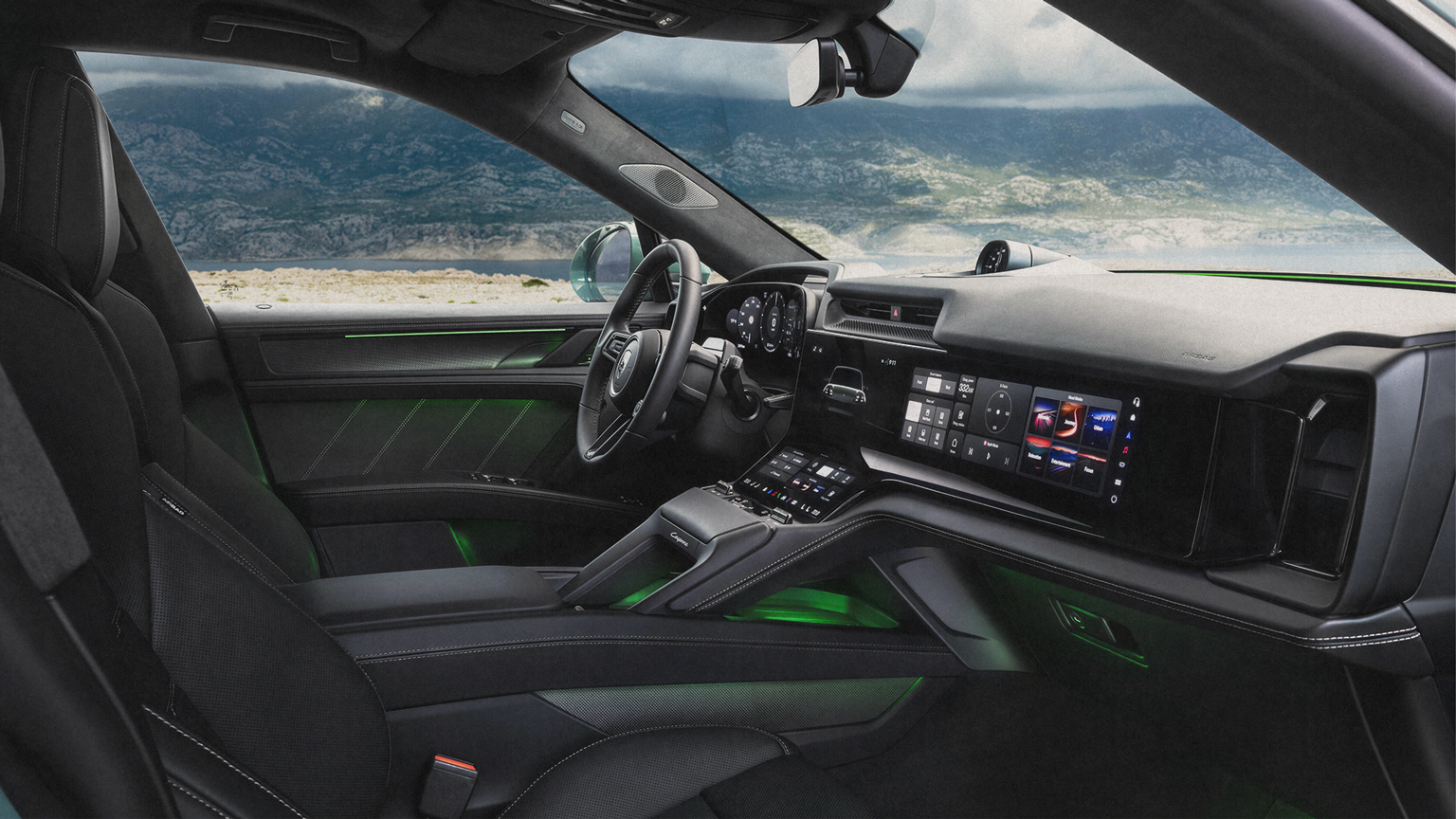
Porsche also seems to think that the interior should dazzle. Literally. As with its contemporary non-EV kin, the dashboard Porsche shows us in these images is a large expanse of screens. The gauges are screens, the center panel is a pair of screens (artfully curved together, it should be noted, atop a flying buttress of grab handles) that seamlessly transition into the passenger’s broad panel. Clean and modern, yes, but also intimidating.
The same could be said for the exterior—the clean and modern, yet intimidating, part. Not the screens, which are thankfully all inside. In profile, that body looks sleek, lithe, athletic. Very different from the bulbous first-generation Cayenne, with which it seems to share only a badge. And it also significantly differentiates the Cayenne Electric from its Macan EV counterpart, which has a sharply raked rear window that gives it almost a Kammback profile. The Cayenne Electric, befitting its slightly more conservative positioning in the lineup, gets a more traditional SUV D-pillar and a small spoiler jutting out over the backlight.

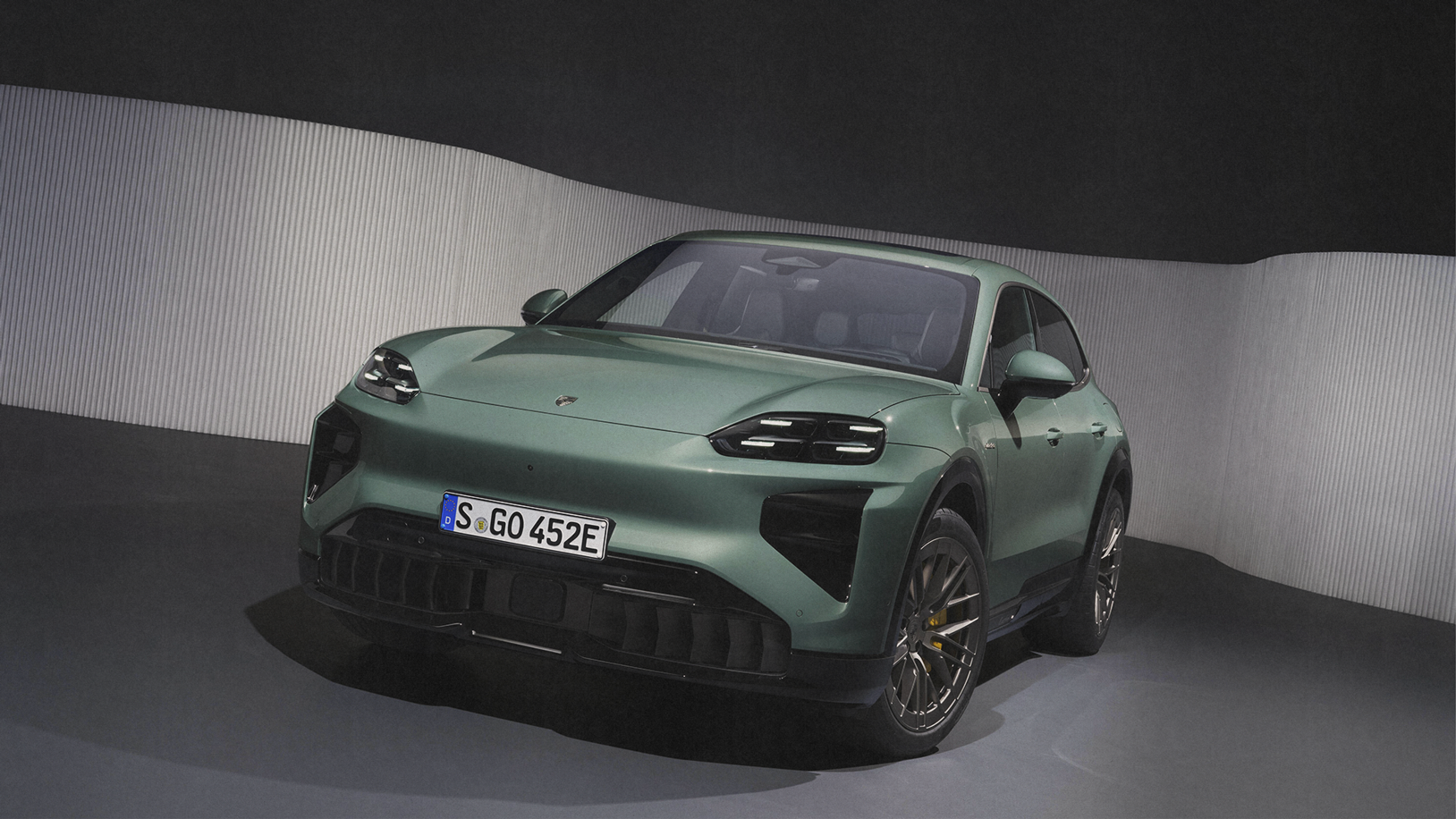
The front and rear follow some modern Porsche trends. The company’s signature Matrix Design headlights return, looking a bit amphibian perched above the Cayenne Turbo Electric’s broad fascia that is pointedly carved up by large, severe-looking inlets and cutouts. No family vehicle with more than 1,000 hp should need to visually convey its aggressiveness so overtly, but here we are. That isn’t even mentioning the retractable “aero blades” at the back, paddles that look a bit like strangely shaped missiles resting in their launching wells, ready to attack ill-flowing air. Active aerodynamic elements that are this visually pronounced are cool, in my mind, bringing the Mitsubishi 3000GT VR-4 to mind. That was a car that had no shame about gimmicks, or anything really.
Not all Cayenne Electrics will be four-figure beasts, and perhaps the less potent versions will get a better-balanced fascia, like the Macan EV wears. The non-Turbo (still sans turbos) comes in at a very reasonable 402 hp, with up to 435 and 615 lb-ft for short bursts. Its 4.5-second to 60 mph run is very respectable for a large SUV, and puts its acceleration back within the realm of palpable performance.
I wonder if this formula works. The Macan EV is more visually distinct, a little more stylish, whereas the new Cayenne Electric’s top trim is a musclebound monster.
Porsche isn’t talking about range, either, which will certainly be a consideration for those who’d like to take long family trips in their stylish and comfortable Porsche SUV. At least it’ll charge fast; Porsche’s 800V architecture is world class.
Recent Posts
All Posts
August 3, 2026
July 30, 2026

July 27, 2026
Leave a Reply
You must be logged in to post a comment.