Anti-Hero
November 10, 2025
Alex KiersteinThe Drive Chevelle will never be worth big movie-car money. That’s what makes it great, and why you should buy it.
After Drive came out, its director Nicolas Winding Refn gave some truly memorable interviews, which I encourage you to read. They’re colorful, offbeat. He’s a Danish director who hadn’t intersected much with Hollywood before the movie, so some of the anecdotes are tender. It’s clear he bonded with Ryan Gosling. Refn, who doesn’t drive, had Gosling drive him around L.A at night so Gosling could show him the locations from the book the movie is (loosely) based on. The cast lived together during the shoot, Refn told CinemaScope. With that context, the oft-repeated story of how the director let Gosling pick out his own hero car for the movie makes a little more sense.
Gosling was showing Refn a version of L.A. that was real to him, not as part of a method-acting process. You get a sense, reading all of these interviews, that Refn also developed a fondness for the city that goes beyond its much-mythologized onscreen appearances. So Refn made a movie about contrasts. About the silent Driver’s eery and instantaneous switch from empathetic to ruthless. Al Brooks, the comedian, as an unsettling gangster. About the glamorous, twinkling city’s dark corners.
And the car.
I can think of a lot of reasons why the 1973 Chevelle Malibu is worth whatever Bonhams will sell it for in Paris later this month, but the most important one is that it’s cool.
Which is impossible to define, but I’ll try, starting with the choice itself. As Gosling told Empire magazine, he didn’t know a thing about cars. The Chevelle appealed to him organically. He chose it, he helped work on it. It’s delightful because it wasn’t calculated. It wasn’t some cute idea, some clean car made artificially grimy, a wink-nod sleeper that only a real car nut would pick up on. If it’s trying too hard, it’s not cool.
“For instance, I don’t know how much preparation actually makes its way in obvious ways into a film,” Gosling told Empire. “Fuck, I mean, someone else could have built a ’73 Chevy Malibu and you’d never know the difference. My character never has to talk about cars or do anything underneath a car, so it doesn’t really matter. [W]ith every character you play, you have to find a way in. Sometimes it’s hard, sometimes you can’t really find the thing you need. But it’s important to me.”
To me, at least, that comes through the look and prep work done to the car. Its place in the film—it’s the Driver’s, something meaningful. He’s not using it for getaway driving. He’s using it for respite. The late-night drive therapy, to a soundtrack of electronic music with a 1980s-that-never-were flavor.
Refn, suffering from the flu and missing his wife and young child, breaks down sobbing during one of his night drives with Gosling. As Gosling relates the moment to Empire, Refn tells him, “This is the movie. It’s about a man who drives around, listening to pop music at night because it’s the only way he can feel.”
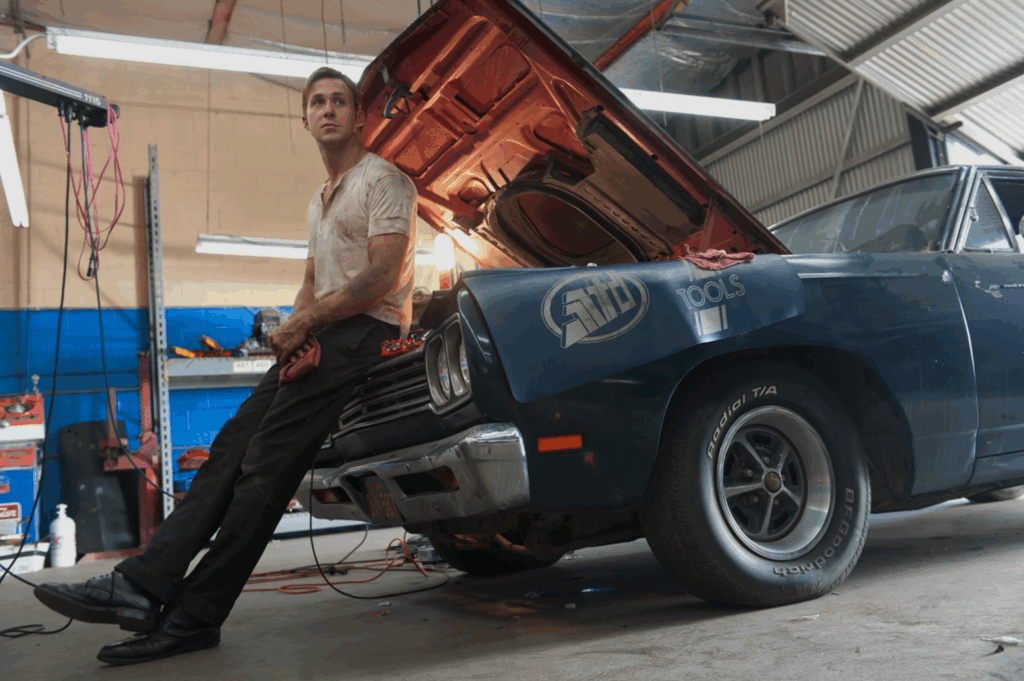
It’d be easy to think of the Chevelle somewhat cynically, as an engineered experience to help burnish the authenticity of the movie. But listening to the actor and director return to the same themes in various interviews, it’s clear that the Chevelle is intended as a very atypical hero car. It’s a metaphor for Gosling (the person, not the Driver character) and Refn (who, to be clear, may not have ever been in the car himself) of the connection the two developed on those night drives, bonding with each other and the city itself.
That is not something a prop department can build for you. That’s something that people have to create. It’s sentimental, and that’s ok.
With all that said, with all those intangibles baked into the car’s backstory, it’s worth stating that the car itself is actually cool in an effortless way. This isn’t now, or is it likely to be in the future, the sort of car that enthusiasts actively seek out—unless there’s an underlying meaning, a sentimental attachment. That gives it an underground, natural sort of appeal. Its potential isn’t obvious. It’s not even a highly recognized sleeper. It’s unusual but not anonymous. And it has plenty of room under the hood for something absolutely legendary.
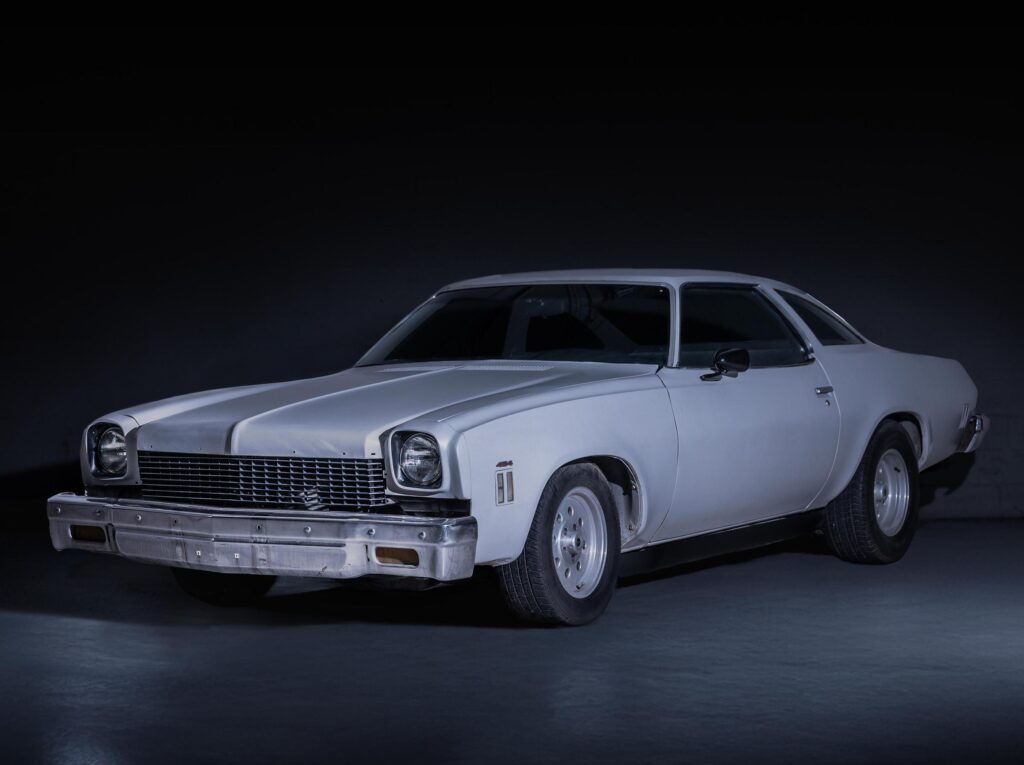
The car Bonhams is offering, along with the other two cars that appeared in the movie, sports a simple, reliable, inexpensive, and perfectly adequate Chevy 350 and three-speed auto combination with only a four-barrel carb and some long-tube headers to give it a little extra zip. Unless a post-Gosling owner has messed with it, of course. Again, that’s fine. Smallblocks make good power when they’re done right, and just like a ‘73 Chevelle, they’re affordable.
Bonhams estimates it’ll sell for between $70,000 and $90,000, which is a fair bit of change for a ‘73 Chevelle but not a lot for a movie car with this kind of offbeat cool factor. I would also be lying to you if the idea of cruising around in it at night, Moroder on the tape deck, doesn’t sound a hell of a lot better than therapy.
Recent Posts
All Posts
August 3, 2026
July 30, 2026
July 27, 2026
Leave a Reply
You must be logged in to post a comment.