EQ Post Facto
December 8, 2025
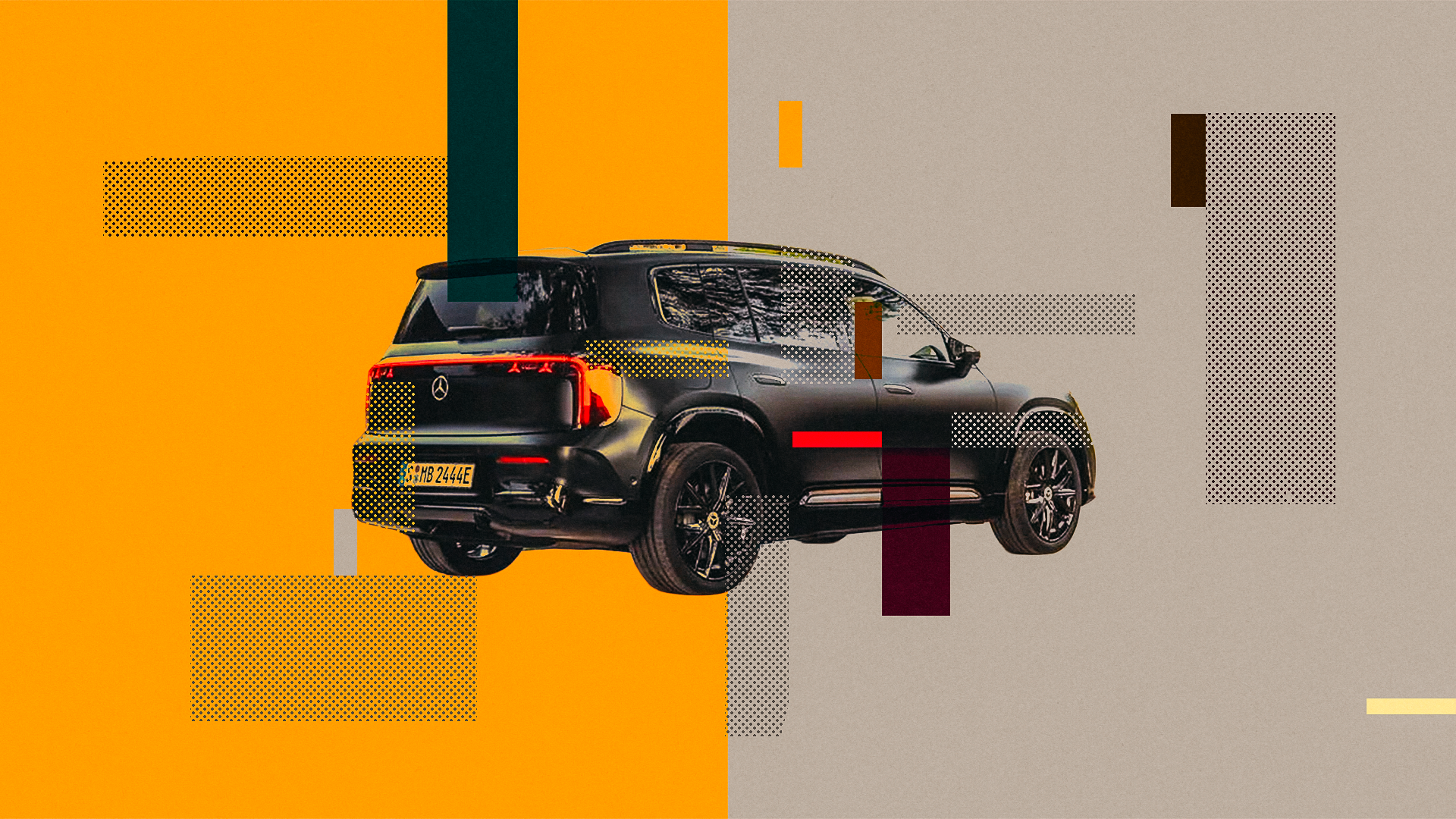
Alex KiersteinThe 2026 Mercedes-Benz GLB helps hasten the death of the EQ sub-brand and the transition to “powertrain choice.”
Given how the entire Mercedes-Benz EQ branding and design experiment has gone for the company, you are probably not surprised that the all new (and, for now, all-electric) 2026 Mercedes-Benz GLB is launching not as an EQB, but as a “GLB with EQ Technology.” Even that nomenclature is thankfully a placeholder, as at some point the “with EQ Technology” will give way to “Electric,” which aligns more with contemporary headwinds against EV adoption.
It doesn’t look like the existing EQB, with its smoothed over shapes and solid grille. It looks like the GLB, the old one, mostly. But it’s all-new, actually, despite “all-new” being almost meaningless today. It is built on a new platform, the Mercedes-Benz Modular Architecture (MMA) platform shared with the recent CLA redux. It’s a little larger (about 4 inches), with a slightly longer wheelbase (about 2 inches). That growth should make the optional third row a little more habitable, and allows for four total car seat installations, which is a genuinely useful feature for parents seeking more flexibility in how things are arranged inside.
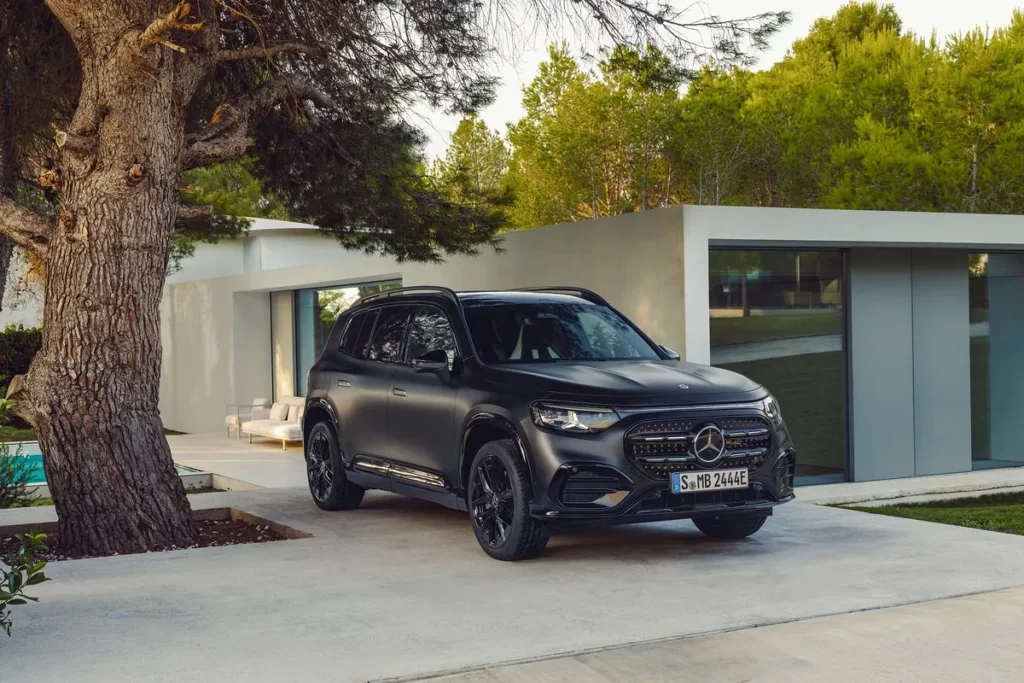
To summarize: The “separate” EQB model is no more. The electric GLB will launch first, with a hybrid to follow, and they will look pretty much the same. In other words, consumers will have “powertrain choice” enabled by the modular architecture that can easily accommodate both hybrid and EV drivelines. In fact, depending on what the driver orders, the new GLB can be front-, rear-, or all-wheel-drive within the same chassis.
Those powertrain choices are, specifically, two flavors of EV and one (coming) hybrid model. The GLB 250+ and 350+ 4Matic offer 278 and 349 hp respectively, the latter juiced by a 107-hp motor on the front axle. Both feature a 85-kWh li-ion battery, offering up to 390 miles of range on the European test (EPA numbers to come) and 320-kW fast-charging capability using 800V charging technology. The upcoming hybrid uses a 1.5-liter Atkinson-cycle I-4 and single transmission-mounted e-motor, like the CLA, with a 1.3-kWh li-ion battery. It’ll look almost the same as the electric models.
Like the CLA, the GLB isn’t just a vehicle more suited to the moment we’re in, it’s also a sign of where companies are headed. Modular platforms allowed automakers to hedge their EV transition pledges years ago. Whether that was a prescient move or a desired outcome is a little unclear; it’s probably a bit of both. Few legacy automakers want to put their entire business on the line to bet on a pure EV future, especially as political pledges and mandates wobble. Just a year or two ago, an EV-only subbrand seemed like an important statement of progress, and now for some automakers it seems like a liability.
Particularly for Mercedes. The EQ subbrand’s family look was broadly panned, and the EQx models made the entire range crowded for consumers. A shift in strategies here results in a stronger EV product that is less differentiated from its GLB base. It allows the vehicles to succeed or fail together. And it allows Mercedes to follow the twisting path forward a little more easily, able to adjust production ratios to match demand (or mandates).
And with no pesky 2030 pledge to honor, either.
Recent Posts
All Posts
March 17, 2026

March 16, 2026
March 12, 2026
Leave a Reply