MORTUS MUNDI
November 18, 2025
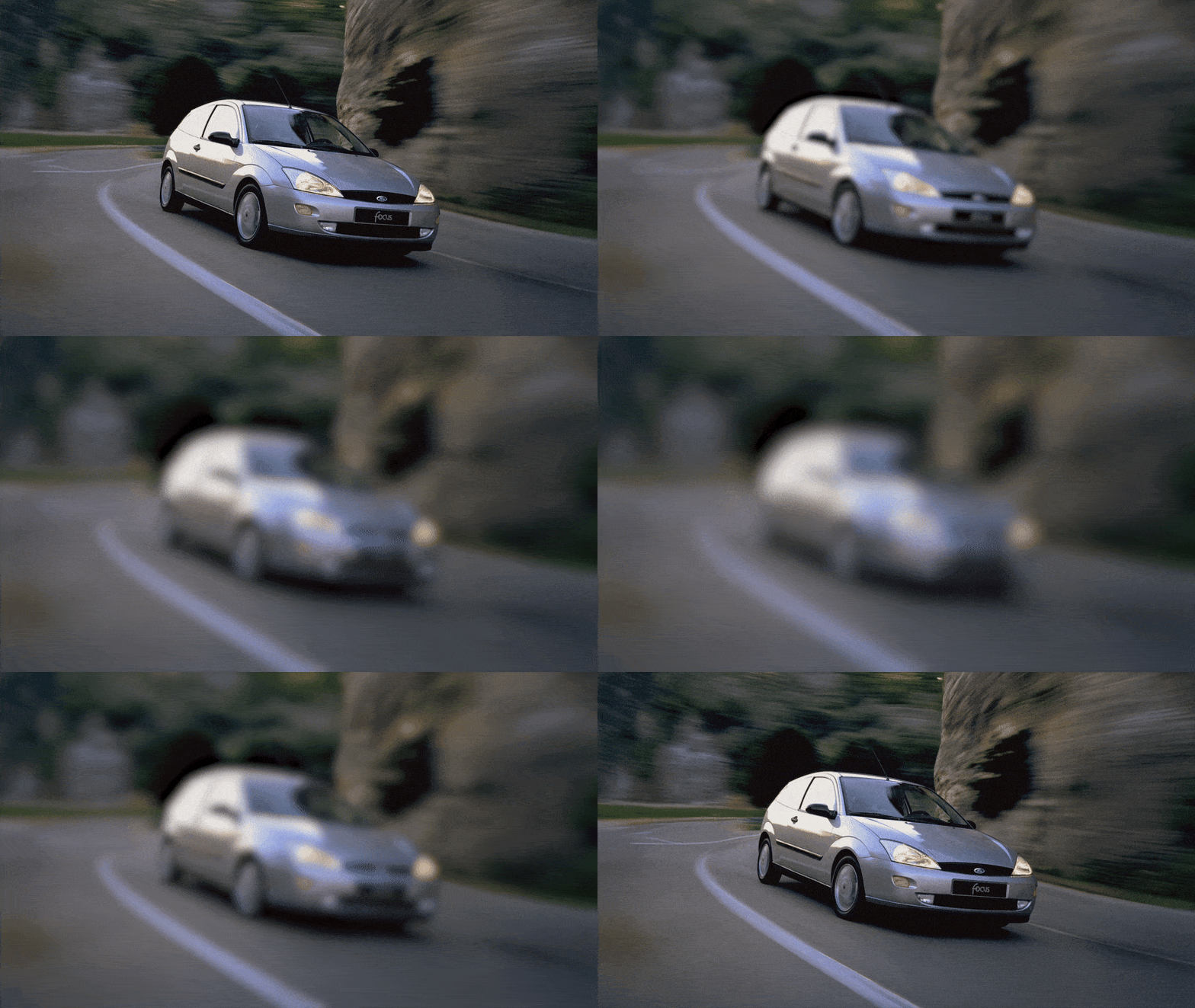
Alex KiersteinThe Ford Focus is dead. Was the global hatchback a success or evidence of a dead-end?
For decades, Ford has sought a “world car”—a cheat code to beat both regional market preferences and regulatory schemes. More than just several similar cars built on a shared platform, but instead a single vehicle with differences only in spec and calibration. Without trying quite so hard, it’s the formula that Volkswagen lucked into with the Type 1 Beetle and the later Golf and Jetta. And, to be fair, Ford’s own Escort and Fiesta were close to that ideal. So, too, was the Focus, at least for a while.
And now the Focus is dead, the casualty of Ford’s desperate attempt to catch up in the EV space in Europe. Once unassailable, the Focus suddenly slipped to newer rivals and internal competition. Subjectively, it also suffered from a crisis of ambition, coasting on strong sales when competitors were thinking about how to encroach. It is a combination of factors and market pressures no one could have foreseen when the Focus was introduced.
The first-generation Focus was wild. Car design trends are, like everything else, cyclical. Boxy, unadorned family hatchbacks dominated the 1980s, and even a softer, organic, and more aerodynamic language emerging in the 1990s changed but didn’t challenge the paradigm. Budget car buyers were conservative, the thinking went. The Fiesta it shared a showroom with in Europe instantly looked frumpy and dated, and got a redesign in 1999.
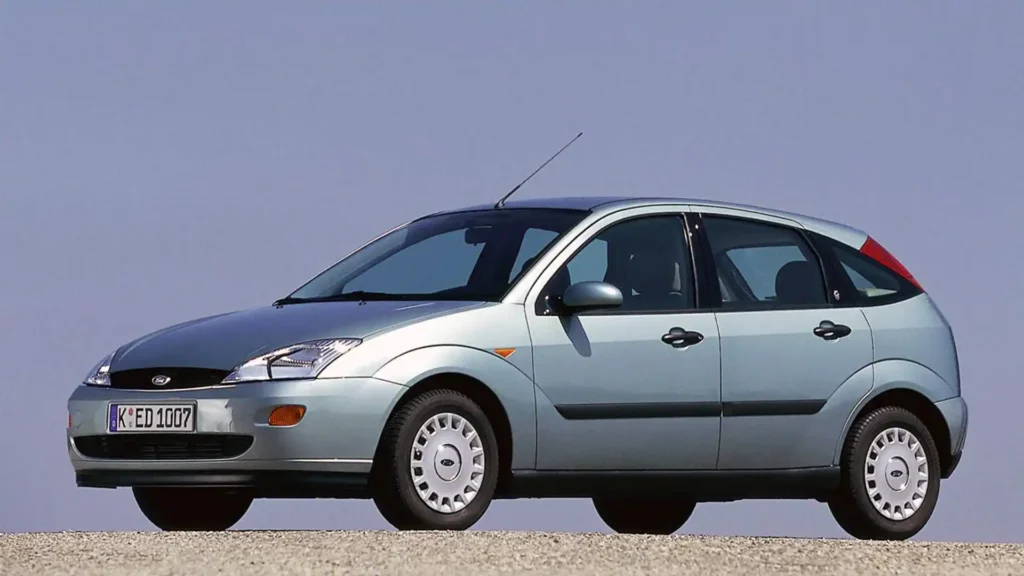
Unlike the Fiesta, the first Focus was sharply geometric. It was intended to attract the eye rather than simply to avoid offending it. The contrast between it and the Escort it replaced was drastic. (Think of the low-trim Escorts, which do look like lightly updated cars designed in the 1980s, rather than the iconic Cosworths.) It’s more upright, space-efficient. It came in a huge array of bodystyles, a range that seems so distant from our SUV-crazed market that it’s sort of difficult to imagine a three-door hatchback, sedan, and wagon all sharing a showroom—in North America, too.
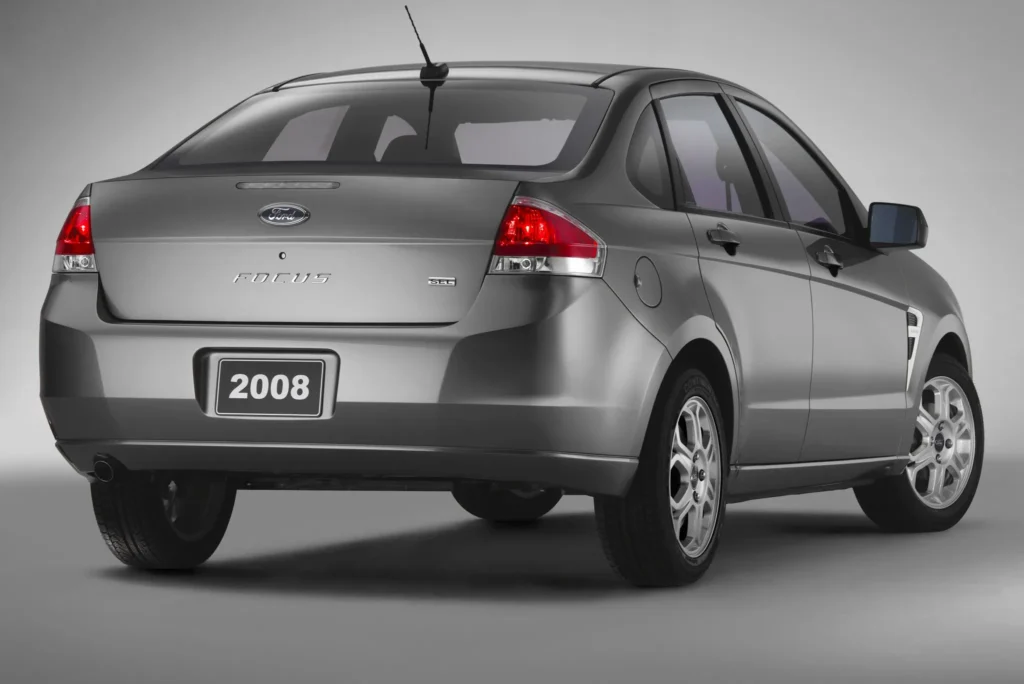
It’s the SVT and (forbidden) RS models that enthusiasts think about today, but the first-gen sedans and wagons were great basic transportation. It’s completely anecdotal, but the Focus went on sale in the U.S. about the time I graduated high school, and for years after they were common in the Seattle suburbs. Spec sheets seem to give SUVs an advantage in cargo-carrying capacity, but I’ve always felt like the longer, flatter load areas of compact wagons have more real-world practicality. And I guess Focus wagon buyers did, too.
And unlike the Ford Mondeo/Contour before it, the Focus did in fact seem well-suited to both European and American tastes. The Focus was comparatively roomy inside, while the American-market Contour was cramped. Americans didn’t seem to understand the Contour’s value proposition, but the Focus wasn’t confusing. The Mondeo was a hit in Europe, but it wasn’t a world car.
I wish I had a clear number to give you to say how many Focuses Ford needed to sell to Americans in a year to keep it in production, but I was surprised to see that it sold close to or more than 200,000 units a year between 2000 and 2016. Even as it was slipping before it was discontinued in 2022, it was selling ok. But that also ignores the fact that every factory pumping out low-margin cars could at least theoretically, be pumping out mid-margin crossovers or ultra-high margin trucks.
At some point, automakers decided, realized, or were convinced that a full line of vehicles wasn’t necessary. The ladder you climbed from entry level to loaded-up transaction cost buffets wasn’t worth building if it meant offering low-margin options at the bottom run. It either no longer applied, or wasn’t as important as conquesting all the buyers into all the trucks. Why have a possible profitable sale in the future when you could have a definitely profitable sale now?
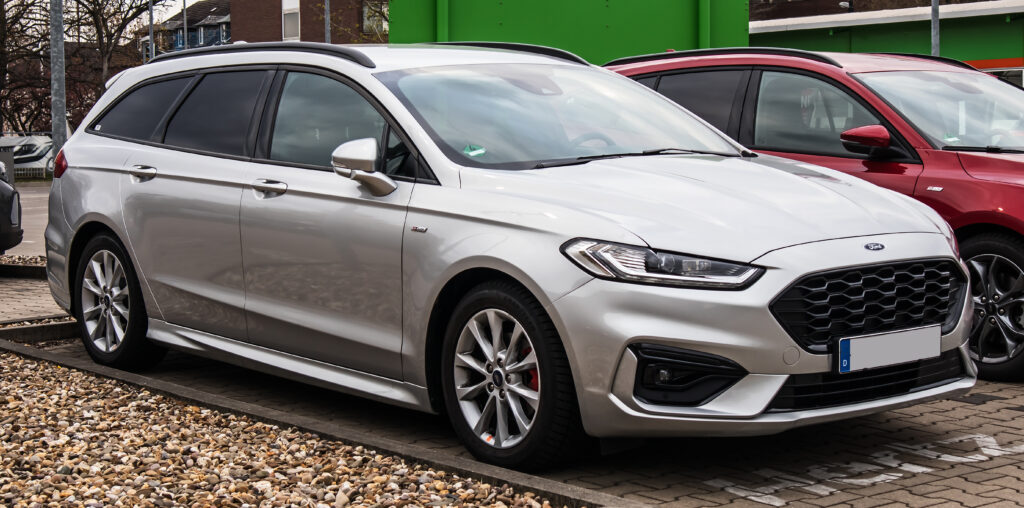
Ford continued selling the Focus in Europe, even introducing a new generation model in 2018 on the C2 platform that underpins the Maverick and Bronco. But with momentary plans to sell a version of it in North America as the Active flubbed because of tariffs placed on Chinese-built cars, much of the sheen of a world car wore off. Whether the Focus Active would’ve worked here in other respects is a matter for the courts of public opinion.
Officially, Ford killed the Focus to create room in its European factories for EV production. Despite an early start and a lot of tech investment in EVs, particularly in the U.S., it’s caught out in Europe with zero in-house EVs. The Explorer and Capri EVs are … Volkswagens. Ford’s EV figures are behind BYD, which is a situation that would be baffling a few years ago.
And the economic situation isn’t helping any. Ford has poured resources into EV production even as EV demand has slowed a bit. It’s not clear if that demand is going to nosedive, or if this is just a normal dip in an overall upward trend, but it has Ford spooked. Ford’s slide in European sales is not ambiguous, though. It may have felt it needed to axe the Focus to help transition to the vehicles that could claw back market share, but in retrospect, maybe it needed to give the Focus (or its supposed crossover replacement) a risky capital injection and make it the segment leader again. Look at how Opel poured money into the Corsa, once a perennial also-ran, and now it—a car, not a carlike SUV—is going gangbusters.
I can’t help but feel that Ford had two options here. It could have evolved the Focus into something relevant to the current situation. The Corsa hedges bets by being both an EV and an internal-combustion car, and it works because its packaging, styling, and price point are attractive. So too, in another segment, could the Focus.
Or it could have gotten a replacement to market before killing the Focus. When you kill something off, the storyline is that the car failed. The nameplate is dead. When you replace it—remember how the impressively modern Focus felt when it replaced the increasingly dated and less interesting Escort? The optics are drastically different.
That stuff matters to us, as observers and analysts, but also to buyers. The narrative is important. Everybody loves an underdog, but the Focus slouched towards mediocrity. And it didn’t have to be this way.
Recent Posts
All Posts
December 5, 2025
Peter Hughes
December 5, 2025
Leave a Reply